© stock.adobe.com/ Kuzmaphoto/ 42241764

Cultural pearls

between rough stones

The Elbe Sandstone Mountains have a long, fascinating history as a cultural landscape. In idyllic nature and along important trade routes, European history was once written here. This becomes present in the palaces, gardens, and castles. Later, the artists of the Romantic era made the Elbe Sandstone Mountains world-famous through painting, poetry, and composition. Sights and information offerings about this can still be found throughout the region today. And contemporary art is not neglected either.

Drei historische Türme der Burg Stolpen mit unterschiedlichen Dächern unter einem blauen Himmel mit Wolken.
© Yvonne Brückner

Three good reasons 

why a vacation in Saxon Switzerland is never boring

  • Elbe sandstone forms the backdrop for Europe's most beautiful nature theater, wonderful music festivals, dedicated cabaret stages, and many other offerings.

  • Magnificent palaces, legendary castles, and picturesque gardens: Historic monuments meet spectacular nature in the Elbe Sandstone Mountains.

  • The variety of topics in the museums of Saxon Switzerland is overwhelming. It ranges from regional history and artists' sites to prehistoric flora and fauna. 

"One ought, every day at least, to hear a little song, read a good poem, see a fine picture, and, if it were possible, to speak a few reasonable words."
Johann Wolfgang von Goethe
Freiluftbühne Felsenbühne Rathen mit Publikum im Nationalpark Sächsische Schweiz, umgeben von Felsen und Bäumen.
© Michael Schmidt
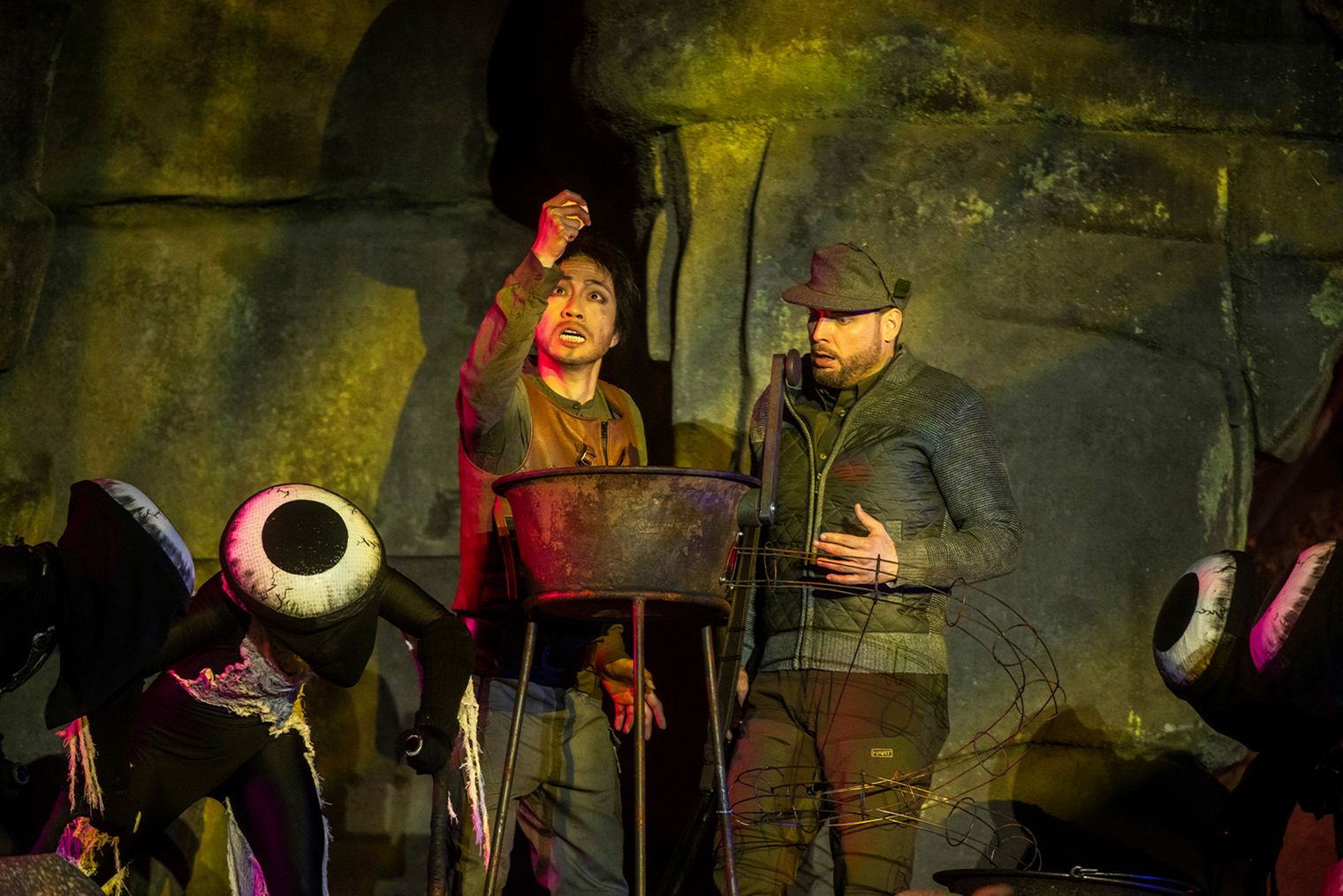
Szene aus Theateraufführung Richard Wagner Spiele: Zwei Schauspieler in Kostümen stehen auf einer Bühne, während ein dritter auf einer Leiter malt.
© Matthias Creutziger

Nature theaters, music festivals and more

Elbe Sandstone Mountains backdrop

Saxon Switzerland is not only a hiking paradise but also home to exciting annual festivals and concert series. From grand opera to rocking open-air events, the range is widely diversified.

  • The Felsenbühne Rathen is Europe's most beautiful natural theater. Where the Wolf's Glen scene was once conceived, Der Freischütz celebrates its homecoming. And not only that. For more than 70 years, the Felsenbühne has captivated theater enthusiasts, classical music lovers, Western fans, families, and hikers. In the midst of the Saxon Switzerland National Park, the picturesque Rathener Wehlgrund forms an impressive, natural rock backdrop. Nature and art merge here in a spectacular way.

  • The International Shostakovich Days Gohrisch, which take place annually near the summer solstice, are a mecca for fans of the famous Russian composer. Musicians of the Staatskapelle Dresden are among the co-initiators and host top-class international artists and ensembles.

  • The ELBLANDIA Festival brings music to the most beautiful places in Saxon Switzerland. In addition to established stars, young musicians from the region also get the opportunity to show their skills. 

  • The summer concerts at the fortress offer the finest live music in the open air at a lofty height. The "Festung Königstein Open Air" promises stomping beats, rock, and pop in a unique setting.

  • In Pirna's Tom Pauls Theater, the curtain rises for plays, cabaret, concerts, readings, and discussions. Within historical walls, the actor and cabaret artist Tom Pauls showcases the Saxon soul in his unmistakable way, just as it lives and breathes. 

  • The Maxen Nature Stage is a small, thoroughly cozy stage located in the former Royal Saxon marble quarry on the edge of the small mountain village of Maxen in Saxon Switzerland. The program ranges from concerts to cabaret and theatrical performances. The nature stage is organized and operated by members and helpers of the Heimatverein Maxen e.V. on a volunteer basis.

  • In Hohnstein's Max Jacob Theater, the Hohnstein Kasper and his friends regularly invite children and adults to puppet shows. The theater also regularly opens its doors for cabaret, concerts, films, and lectures.

  • Cabaret, readings, concerts of all kinds, artist talks, and even travelogues: the offerings at Pirna's Q24 cabaret stage are diverse.

  • That the rocky landscape of Saxon Switzerland is also a spectacular theater backdrop is proven by the 40 members of the SandsteinSpiele association. On six weekends between June and September, they perform their play in the open air in and around Reinhardtsdorf-Schöna – surrounded by a panorama of the Zirkelstein, Kaiserkrone, and the Schrammsteine. The stage settings change as well. Between scenes, the audience folds up their folding stools and hikes to the next location: into the forest, onto the meadow, or into the village.

Overview stage and music

  • Open detail page 'Rathen rock stage'
    Freilichtbühne im Wald mit Publikum und Bühne bei Dämmerung.
    Rathen rock stage
    Open-air theatre
    Amselgrund 17, 01824 Kurort Rathen
  • Open detail page 'Maxen natural stage'
    Freilichttheateraufführung im Wald mit Zuschauern und Schauspielern auf der Bühne.
    Maxen natural stage
    Worth seeing
    Maxener Straße 71, 01809 Müglitztal (OT Maxen)
  • Open detail page 'Theatre Libre Sebnitz'
    Hausfassade mit Eingang ins Theater.
    Theatre Libre Sebnitz
    Theatre
    Schillerstraße 3, 01855 Sebnitz
  • Open detail page 'Forest stage Leupoldishain'
    Open-air stage in the forest with wooden benches and a rock face in the background.
    Yvonne Brückner | AI-optimized | CC-BY-SA
    Forest stage Leupoldishain
    Open-air theatre
    01824 Königstein/Sächs. Schw. (OT Leupoldishain)
  • Open detail page 'Max Jacob Theater Hohnstein'
    Three colorful hand puppets with cheerful faces, in traditional costumes, lying on a table.
    Marko Förster | AI-optimized | CC-BY-SA
    Max Jacob Theater Hohnstein
    Theatre
    Max-Jacob-Straße 1, 01848 Hohnstein
  • Open detail page 'Tom Paul's Theater'
    Haus mit Schriftzug Tom Pauls Theater
    Tom Paul's Theater
    Theatre
    Am Markt 3, 01796 Pirna
Gelb gestrichende Orangerie des Barockgartens Großsedlitz mit großen Fenstern, umgeben von einer gepflegten Außenanlage und blauem Himmel.
© Sylvio Dittrich

Bastions of history

Which palaces and castles you shouldn't miss

Königstein Fortress, Stolpen Castle, Weesenstein Castle, Großsedlitz Baroque Garden: History has left architectural pearls in the Saxon Switzerland. The Electorate and later Kingdom of Saxony presents itself here as fortified and self-confident, but also witty and sensitive.

What makes a fortification impregnable? What must a countess be guilty of to be banished to a remote castle for life? Which Saxon king excelled as a literary translator? And where is one of the most authentic Baroque gardens in Germany located? Those interested in culture will find answers in the Saxon Switzerland.

This place is a legend. Königstein Fortress is one of the largest and most beautiful mountain fortresses in Europe. For a long time, it was considered the safest place in all of Saxony. Dukes and electors came here with their treasures and their entourage when danger threatened. In times of peace, the bastion saw many a lavish celebration and illustrious hunting trip. In its more than 750-year history, the imposing, 10-hectare fortification has been a monastery, state prison, prisoner-of-war camp, military hospital, and much more. Today, the impressive ensemble of late Gothic, Renaissance, Baroque, and 19th-century buildings is one of the most important sights in Germany and a magnet for hundreds of thousands of visitors from all over the world every year.

The Großsedlitz Baroque Garden is a pearl of Saxon horticulture. Over 400 potted plants, wide staircases, water features, expansive visual axes, more than 60 sandstone sculptures, and decorative vases make the ensemble an impressive total work of art of the late Baroque period. The basic form of the park, created between 1719 and 1732, has remained almost completely intact to this day. Thus, one can still wander across the parterres and garden spaces today just as the courtly society of Augustus the Strong once did.

From April to October, various baroque plantings in the borders attract visitors to the park, as do great events or the wonderful permanent exhibitions in the orangeries (June-September).

Zwei historische Türme der Burg Stolpen mit Kuppel und Tor, umgeben von grünem Gras und blauen Himmel.
© Yvonne Brückner

Stolpen Castle on the edge of the Saxon Switzerland National Park has been besieged, defended, conquered, destroyed, and rebuilt time and again throughout its history. In addition, one of the deepest wells driven into basalt in the world can be found here. However, the fortress built on an extinct volcano became famous primarily due to the moving fate of Countess Constantia von Cosel. Probably the most famous woman in Saxon history, she was held prisoner here for 49 years in the 18th century after falling out of favor with Augustus the Strong. No one has lived here longer than her in the 800-year history of the castle. The excellently preserved castle complex with its numerous exhibits brings the tragic story of Countess Cosel and other episodes from the eventful past of the place to life.

Imposantes, historisches Schloss Weesenstein mit Turm, mit Bäumen am Fuße des Schlosses und blauem Himmel mit Wolken.
© Sylvio Dittrich

"Weesenstein is not so easily situated, but prouder and more surprising," wrote a fascinated guest in his travel report as early as 1801. Today's visitors may feel the same or similarly, as the castle rises suddenly and majestically before their eyes on a rocky spur above the Müglitz valley. For at least 700 years, Weesenstein Castle was built and torn down, altered and preserved. Thus arose a structure that harbors traces from Gothic to Classicism within its walls. The castle is an architectural curiosity, because it was built from the top down, always around the rock. As a result, the tower is centuries older than the winter garden below it, the horse stables are on the fifth floor, and the ballroom is below the attic. Also worth seeing is the formal garden inspired by the French style.

Ansicht des Einganges der Burg Hohnstein mit einem hohen Turm und orangefarbenen Wänden, umgeben von grünen Bäumen und blauem Himmel.
© Sylvio Dittrich

Hohnstein Castle is located directly next to the Saxon Switzerland National Park and not far from the Bastei on a rocky spur above the romantic Polenz Valley and the small town of Hohnstein. The medieval castle complex was first mentioned in a document in 1353, was a noble residence, administrative office, state prison, and hunting lodge – and in the 1920s the largest and most beautiful youth hostel in Germany. The modern Kasper theater was also invented here. This and much more from the exciting and eventful history of the castle and its town can be learned in the museum. And in the natural history exhibition, the life of bats and salmon is explained.

Luftbild auf das Schloss Sonnenstein auf einem Hügel, umgeben von Bäumen und dem Stadtbild Pirnas mit roten Dächern.
© Jens Dauterstedt

Sonnenstein Castle is a highly visible landmark above the old town of Pirna. Since its first documentary mention in 1269, it has been a fortress, garrison, sanatorium, state-owned enterprise, and is now the seat of the Sächsische Schweiz-Osterzgebirge district administration office over the centuries. Its appearance changed with its uses. The fortifications and works date back to the 17th century; Canaletto's city views from 1752-55 show the preserved Elbe wing about 20 years after its construction. Today, the 19th-century Neo-Renaissance buildings of the former sanatorium characterize the ensemble. The Pirna TouristService offers guided tours.

Overview of all castles and palaces

  • Open detail page 'Hohnstein Castle'
    A historic castle with red roofs sits enthroned on a hill, surrounded by trees and traditional half-timbered houses under a blue sky.
    czech vibes | AI-optimized | CC-BY-ND
    Hohnstein Castle
    Castle
    Markt 1, 01848 Hohnstein
  • Open detail page 'Pirna-Zuschendorf country castle'
    Colorful mixture of red, pink and white camellia blossoms, decoratively arranged in a wooden frame, surrounded by green leaves.
    Landschloss Zuschendorf, M. Riedel | AI-optimized | CC-BY-SA
    Pirna-Zuschendorf country castle
    Palace
    Am Landschloss 6, 01796 Pirna (OT Zuschendorf)
  • Open detail page 'Děčín Castle (Zámek Děčín, Czech Republic)'
    Aerial view of a castle on a hill next to a river with boats and city view.
    TVSSW, PTV | AI-optimized | CC-BY-SA
    Děčín Castle (Zámek Děčín, Czech Republic)
    Palace
    Dlouhá jízda 1254, 405 02 Děčín
  • Open detail page 'Schluckenau Castle (Zámek Šluknov, Czech Republic)'
    Weißes Schloss mit Ziergiebel, umgeben von einer Rasenfläche und Bäumen.
    Schluckenau Castle (Zámek Šluknov, Czech Republic)
    Palace
    Zámecká 642, 407 77 Šluknov
  • Open detail page 'Langburkersdorf Castle & Culture Barn'
    Yellow castle with green roof and tower, surrounded by trees under a blue sky.
    Yvonne Brueckner, Yvonne Brückner | AI-optimized | CC-BY-SA
    Langburkersdorf Castle & Culture Barn
    Palace
    Dammstr. 2, 01844 Neustadt in Sachsen (OT Langburkersdorf)
  • Open detail page 'Tollenstein Castle (Tolštejn, Czech Republic)'
    Hilly landscape at sunset with a ruined castle on a wooded hill, surrounded by autumnal trees and soft rays of light.
    České Švýcarsko, o. p. s., ? | AI-optimized | CC-BY-SA
    Tollenstein Castle (Tolštejn, Czech Republic)
    Viewpoint/viewing tower
    Rozhled 79, 407 56 Jiřetín pod Jedlovou
  • Open detail page 'Struppen Castle'
    A white manor house with red roofs, surrounded by trees and green lawns, in clear, sunny weather.
    Schlossverein Struppen | AI-optimized | CC-BY
    Struppen Castle
    Palace
    Kirchberg 6, 01796 Struppen
  • Open detail page 'Botanical Garden Bad Schandau'
    Large, winding tree branches and lush ferns in a shady area of the botanical garden.
    Yvonne Brueckner, Yvonne Brückner | AI-optimized | CC-BY-SA
    Botanical Garden Bad Schandau
    Park/garden
    Ostrauer Berg 2, 01814 Bad Schandau
  • Open detail page 'Small bastion with rhododendron park (Rathen)'
    View of the Elbe and Niederrathen
    Yvonne Brückner | AI-optimized | CC-BY-SA
    Small bastion with rhododendron park (Rathen)
    Viewpoint/viewing tower
    01824 Kurort Rathen (OT Niederrathen)
  • Open detail page 'Grosssedlitz Baroque Garden'
    Yellow baroque building of the Grosssedlitz Baroque Garden with a red roof, surrounded by well-tended gardens and trees in blue and white pots, under a clear blue sky.
    TVSSW\Tino Richter | AI-optimized | CC-BY
    Grosssedlitz Baroque Garden
    Worth seeing
    Parkstraße 85, 01809 Heidenau
  • Open detail page 'Rammenau Baroque Palace'
    Yellow baroque castle with red roof, lightly covered with snow, in the sunlight; snow-covered trees and bushes in the foreground.
    © Michael Klinger | AI-optimized
    Rammenau Baroque Palace
    Palace
    Am Schloss 4, 01877 Rammenau
  • Open detail page 'Stolpen Castle'
    Stolpen Castle with its high, gray walls on a green hill, surrounded by autumnal trees under a blue sky.
    Czech Vibes | AI-optimized | CC-BY
    Stolpen Castle
    Castle
    Schloßstraße 10, 01833 Stolpen
  • Open detail page 'Pirna-Sonnenstein Memorial'
    A room with white walls and a vaulted ceiling shows black and white portraits of people mounted on stands and arranged in two rows.
    Stiftung Sächsische Gedenkstätten, Hagen Markwardt | AI-optimized | CC-BY-SA
    Pirna-Sonnenstein Memorial
    Museum/art collection
    Schloßpark 11, 01796 Pirna
  • Open detail page 'Terraced gardens Pirna'
    Green sign with the inscription "Malerweg" indicating hiking times, in the background a staircase and a historic building in sunny weather.
    Achim Meurer | AI-optimized | CC-BY-SA
    Terraced gardens Pirna
    Park/garden
    01796 Pirna
  • Open detail page 'Königstein Fortress'
    The historic Königstein Fortress sits enthroned on a wooded hill, surrounded by mist, under a gently overcast sky.
    TVSSW, Britta Prema Hirschburger | AI-optimized | CC-BY
    Königstein Fortress
    Fortress
    Am Königstein, 01824 Königstein/Sächs. Schw.
  • Open detail page 'Cuckoo Stone Castle'
    Castle on a hill surrounded by trees under a blue sky.
    Yvonne Brückner | AI-optimized | CC-BY-SA
    Cuckoo Stone Castle
    Palace
    Am Schloßberg 1, 01825 Liebstadt
  • Open detail page 'Pillnitz Palace and Park'
    Pillnitz Palace with its yellow façade and dark roof, surrounded by colorful flowerbeds under a clear blue sky.
    Sylvio Dittrich | AI-optimized | CC-BY-SA
    Pillnitz Palace and Park
    Palace
    August-Böckstiegel-Straße 2, 01326 Dresden
  • Open detail page 'Sonnenstein Castle (Pirna)'
    Sonnenstein Castle on a wooded hill with autumn-colored trees, red-tiled roofs and historic buildings in the foreground.
    KTP, Jens Dauterstedt | AI-optimized | CC-BY-SA
    Sonnenstein Castle (Pirna)
    Palace
    Schloßhof 2-4, 01796 Pirna
  • Open detail page 'Weesenstein Castle'
    Historic Weesenstein Castle with its red roof and high tower, surrounded by manicured gardens and bare trees under a clear blue sky.
    TVSSW, Hans Fineart | AI-optimized | CC-BY
    Weesenstein Castle
    Palace
    Am Schloßberg 1, 01809 Müglitztal
Fünf Bilderrahmen mit Gemälden stehen auf Staffeleien in einem hellen Raum des Robert Sterl Hauses in Wehlen.
© Marko Förster
Museumsraum der Neumannmühle mit Holzwerkstatt mit Maschinen, Holzstämmen und Werkzeugen in einem rustikalen, hölzernen Innenraum.
© Marco Förster

Museums in Saxon Switzerland

A multitude of museums and exhibitions in Saxon Switzerland have a multifaceted regional focus. Interesting local history and town museums can be found in many places. Here, you can dive deep into the culture and tradition of the region.

  • Walking on artists' paths: The  Robert-Sterl-Haus in Naundorf is one of the few originally preserved artists' homes in Germany and allows an insight into the life and work of the great German Impressionist.

  • In the visitor mine Marie Louise Stolln in Berggießhübel, you can experience the mining history in the Gottleuba valley up close.

  • Old crafts can be discovered, for example, in the show workshop Deutsche Kunstblume Sebnitz or in the carving workshop in Hohnstein.

  • An excursion into the recent past of the fascinating regional history of spas and medicine is offered by the  Medical Historical Collections in the Bad Gottleuba Health Park. 

  • Richard Wagner was fascinated by the Elbe Sandstone Mountains. He owed some of his happiest ideas to the inspiring power of the mystical rock world. The Richard Wagner Sites Graupa are considered the oldest Wagner museum in the world. This is where the complete composition sketch for Wagner's opera "Lohengrin" was created. 

  • Understanding nature: The Saxon Switzerland National Park Centre in Bad Schandau is the central information center for visitors to the national park. It provides appealing, multimedia, and accessible information about the background of the geology, flora and fauna, as well as the natural and cultural landscape of the region.

  • The Pirna Sonnenstein Memorial is a place of mourning and remembrance for the euthanasia victims of the Nazi regime.

  • The Hohwald Gold and Mineral Experience Center provides information about the geology and the extraction of gold, minerals, and rocks in the region. 

  • Experience prehistoric times: In the Sebnitz Prehistoric Park, you can track down dinosaurs, early humans, and the peculiar flora of prehistoric times.

  • Idyllically situated in the Kirnitzschtal, the Neumann Mill, a historic sawmill and wood grinding mill from the 19th century, transports its visitors back to long-gone times with its original waterwheel and show workshop.

Overview map of the museums

Caspar David Friedrich

 in Saxon Switzerland

It is arguably the most famous painting of German Romanticism: "Wanderer above the Sea of Fog". It was created around 1818 by Caspar David Friedrich (1774-1840). Fairytale-like, mysterious and vivid - this is how the landscape presents itself to the viewer. The painting is famous not only for its aesthetic qualities, but because it is a symbol of the spirit of Romanticism. The landscape depicted in the painting is Saxon Switzerland. For Friedrich, who spent most of his life in Dresden, the nearby world of rocks was a place of longing and inspiration.

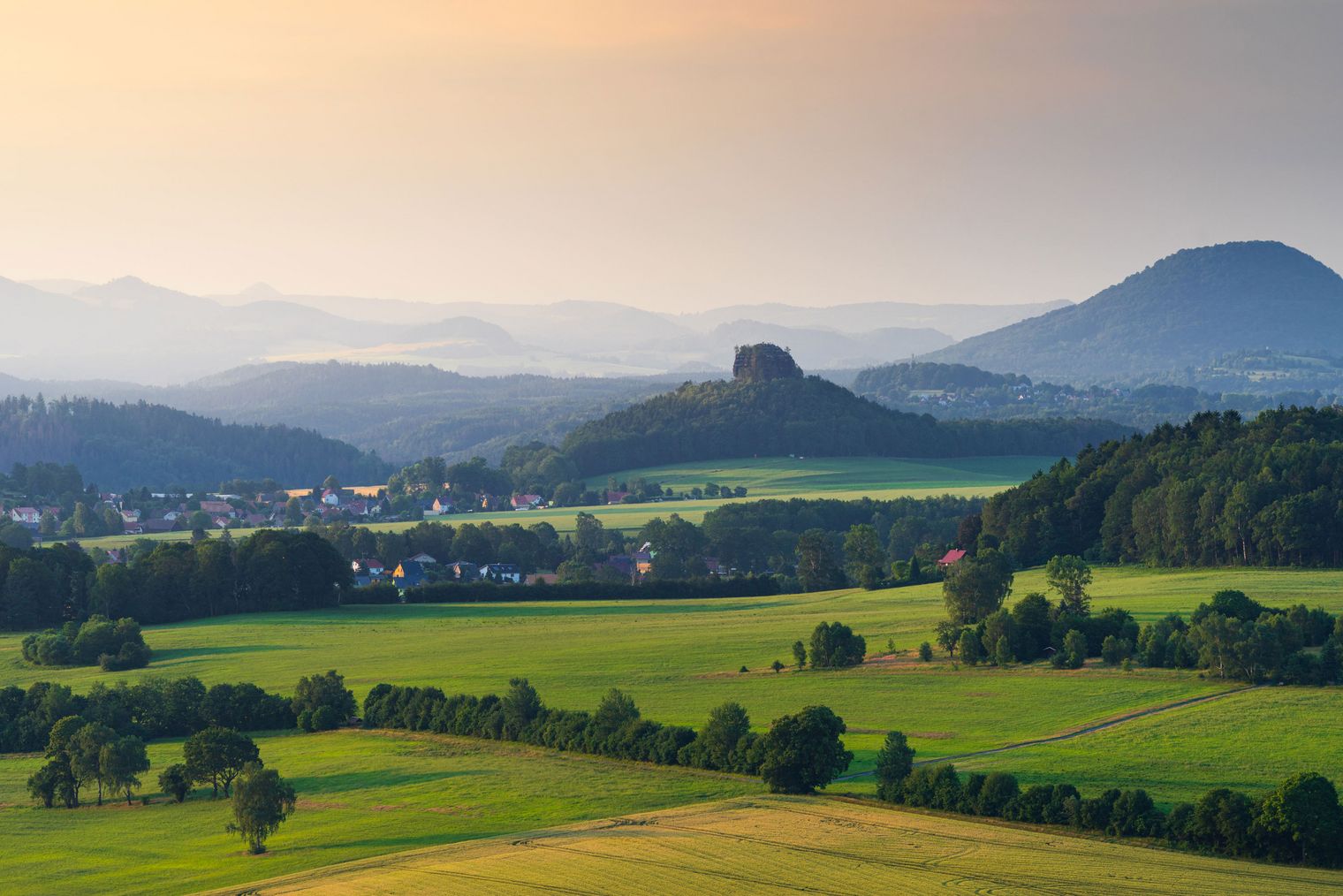
Ausblick vom Wolfsberg über eine weite Landschaft mit sanften Hügeln, Feldern und dem markanten Zirkelstein im Hintergrund.
© Philipp Zieger
Zwei Personen stehen vor einer Felswand und interagieren mit einem Instrument.
© Martin Förster

Carl Maria von Weber

 in Saxon Switzerland

Saxon Switzerland was a place of inspiration for Carl Maria von Weber. In his diaries, he describes hikes to the Bastei, through the Uttewalder Grund or to the Kuhstall. The Wolfsschlucht near Hohnstein might have inspired the composer for the famous Wolf's Glen scene in Der Freischütz.