Winter

in Saxon Switzerland

In winter, Saxon Switzerland is a hidden gem, a refuge for romantics, connoisseurs and those seeking an escape from the city. Only those in the know come here at this time of year. The rocky landscape reveals its wild and mysterious side. When snow falls, it creates enchanting scenes that remain etched in the memory for a lifetime. Visitors often have the hiking trails and viewpoints largely to themselves. And the region’s most beautiful destinations and hotels​​​​​​​ put together exciting experience and wellness packages.

Winter hiking

Winter experiences

Winter wellness

Christmas markets

Digital Felsenwinter experience

Winter hotel offers

Winter cuisine

Three good reasons

to visit Saxon Switzerland in winter

  • Quiet contentment: tranquillity returns in winter, and popular hiking trails are now almost entirely yours to enjoy.

  • Unique vistas: the beauty of winter is that you can finally enjoy completely unobstructed views! It is therefore the perfect time to appreciate the many magnificent vistas even more clearly.

  • Winter experiences: hiking across table mountains by lantern light, drinking mulled wine beneath mighty cliffs, and stepping into steaming hot tubs under the night sky – this, too, is what a winter holiday can be like.

Rocky winter in 18 locations

Seek solitude. Walk in silence. Listen to the wind, the call of the raven, the murmur of the frozen stream beside the path. Touch the rock that, 100 million years ago, was still sand on the seabed. Climb a table mountain, take in the panorama, breathe the winter air – and feel the cares of everyday life fall away. Rocks, clarity, tranquillity: winter hiking in Saxon Switzerland is wellness for the mind. In the light of the low winter sun, the wildly romantic rocky landscape not far from Dresden appears particularly majestic and mysterious. From late autumn onwards, even the most popular paths and viewpoints are often deserted, while the traditional mountain inns, with their wood-panelled dining rooms and time-honoured tiled stoves, feel all the cosier.

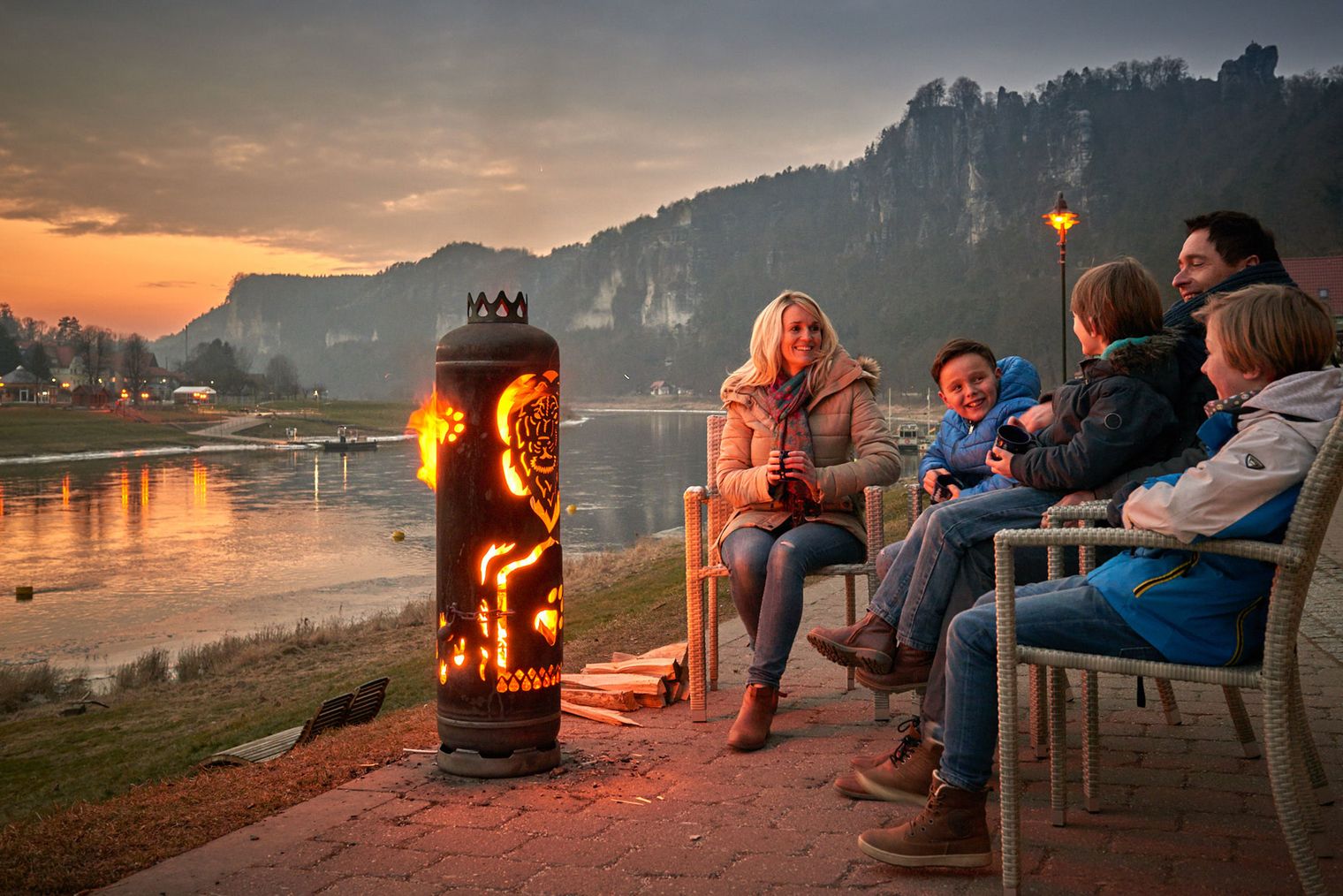
Hiking is the most immersive way to actively experience the landscape of the national park region in winter. More than 1,200 kilometres of marked trails, ranging from easy to challenging, are available. Most are accessible all year round without special equipment. And in the evening, when winter enthusiasts return to their accommodation, the windows of the historic Upper Lusatian houses may already be glowing, wood fires may already be crackling in fire bowls and fireplaces, or hot chocolates may be steaming in rustic earthenware mugs. Perhaps the sauna has already been heated as well. Winter can be this beautiful – when it meets sandstone.

All destinations at a glance

Schmilka Winter Village

In winter, Saxon Switzerland is a dream of ice and snow. Silence then descends upon the forests and rocks. Wisps of mist dance above the Elbe Valley. During the colder months, the area around Schmilka Mill is transformed into the unique Schmilka Winter Village. Lanterns and log fires provide warm light and an atmospheric ambience. The mill tavern serves hearty dishes to nourish body and soul, accompanied by a dark organic beer from the Schmilka brewery. On a brewery tour, you can even watch the master brewer at work.

Next door, the organic bakery is filled with the wonderful aroma of freshly baked mill bread. Enjoy the soothing warmth of the panoramic sauna overlooking the festively decorated mill courtyard. Or brave the cool temperatures and take a dip in a heated bathing tub. The bath attendant regularly hosts a beer-bathing day here. Round off your day of experiences in a relaxed setting with event highlights such as readings, concerts or travel talks. Spend an indulgent holiday surrounded by nature and let yourself be enchanted by the Schmilka Winter Village!

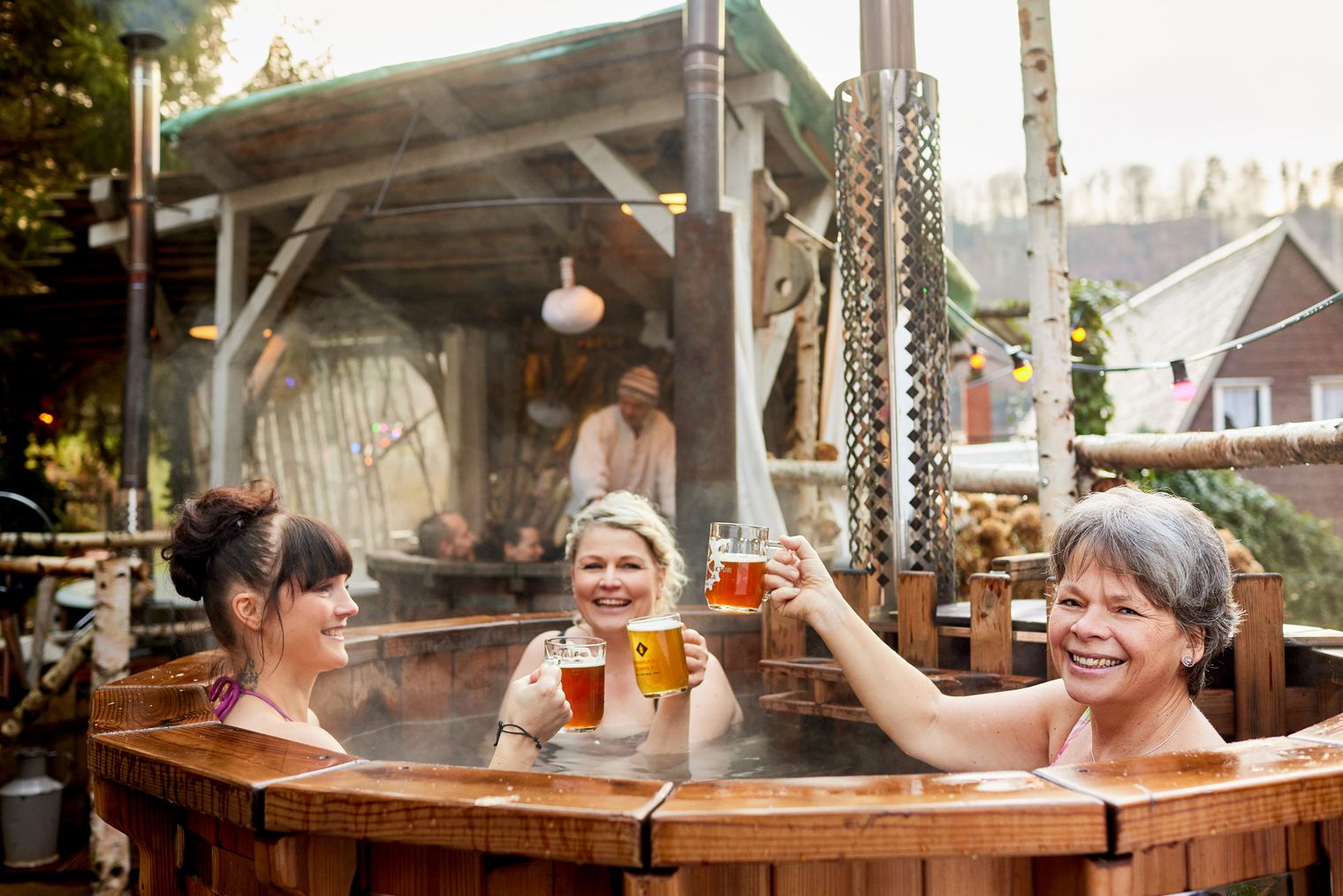
Girls’ Getaway in the Hot Tub at Schmilka Winter Village
Hot Tub Experience at Schmilka Winter Village

Winter experiences in Schmilka

  • chat over mulled wine in the Mühlenhof

  • relax in the panoramic sauna overlooking the cosy Mühlenhof courtyard

  • enjoy a beer bath under the night sky in the steaming hot tub

  • enjoy the aroma of freshly baked bread from the mill bakery

  • experience a cosy atmosphere on a culinary and literary journey through time – sugar cake stories by the fireplace

  • enjoy an indulgent Advent brunch at the StrandGut organic restaurant

  • Celebrate a traditional brewery Christmas with a hearty buffet, house-brewed beer and live music in the rustic brewing hall

Rock winter in Bad Schandau

In 1806, Theodor Körner discovered a "place of natural power and splendour": Schandau. The poet was still a student, but the former boatmen's town was already a popular travel destination. Later, this charming retreat nestled in the valleys of the Elbe and Kirnitzsch was elevated to the status of a spa. Perhaps it is the panoramic scenery, perhaps the clear air, perhaps the immediate proximity to the wilderness of the rear Saxon Switzerland region – the fact is: Bad Schandau does you good. It cannot be measured. Only felt.

Amid the bustle of summer, the wondrous healing power of this famous spa town almost fades into the background. In the peace and clarity of winter, however, its effect is all the stronger. On walks through the nearby core zone of the national park, silence settles like balm upon the mind and senses. Thoughts can be pursued to their conclusion, allowing new ideas to emerge. Tranquillity, exercise and creativity: these are also the themes of the invigorating activities with which Bad Schandau invites visitors to enjoy a winter retreat. Check in, breathe deeply and recharge: Bad Schandau looks forward to welcoming you!

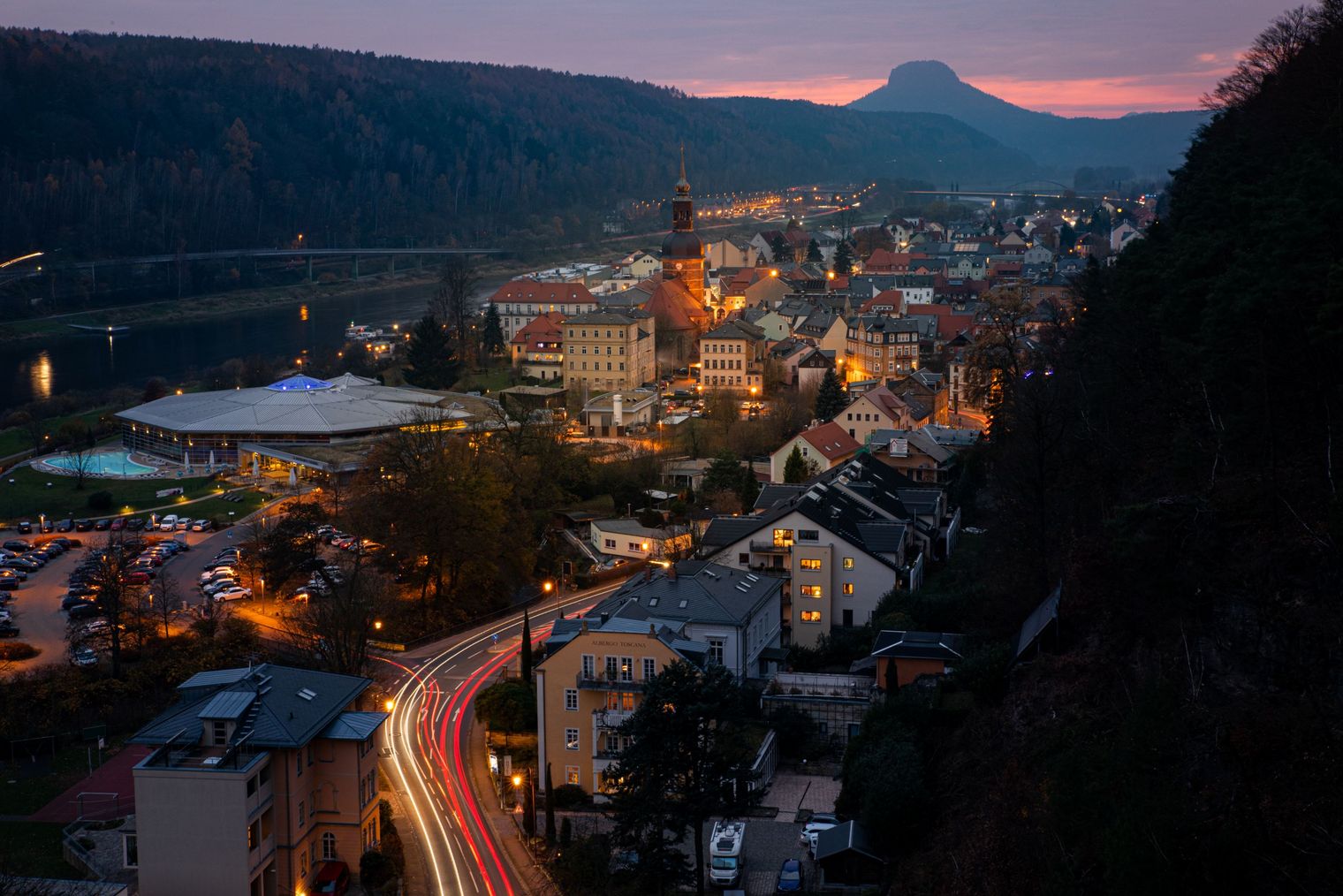
View of Bad Schandau from the historic lift at sunset on a winter evening
View of Bad Schandau

Winter experiences in Bad Schandau

Winter among the rocks at the Bastei

The viewpoints at the Bastei and the Bastei Bridge itself are deserted, the first rays of sunlight play across the rocks, the mist swirls mystically through the Elbe Valley, and nature softly sings its song.
Those who visit the Bastei during the summer months can experience this in the early morning and evening. The winter season is a genuine insider tip. This is where you will find it: the other side of the Bastei. This period is unsurpassed in terms of peace and  tranquillity. Nature means replenishing your energy – there is no quicker way to unwind. 

The Berghotel & Panoramarestaurant Bastei offers its guests a “hot and cold” stay: relaxing walks in the heart of Saxon Switzerland National Park, a panoramic sauna & steam bath, as well as a soak in the cedarwood tub in the wellness area, followed by an indulgent menu in the world-famous panoramic restaurant. During the colder months, the Berghotel on the Bastei is the perfect place to replenish your energy and escape the stresses of everyday life for a few days. Come and experience the other side of the Bastei for yourself!

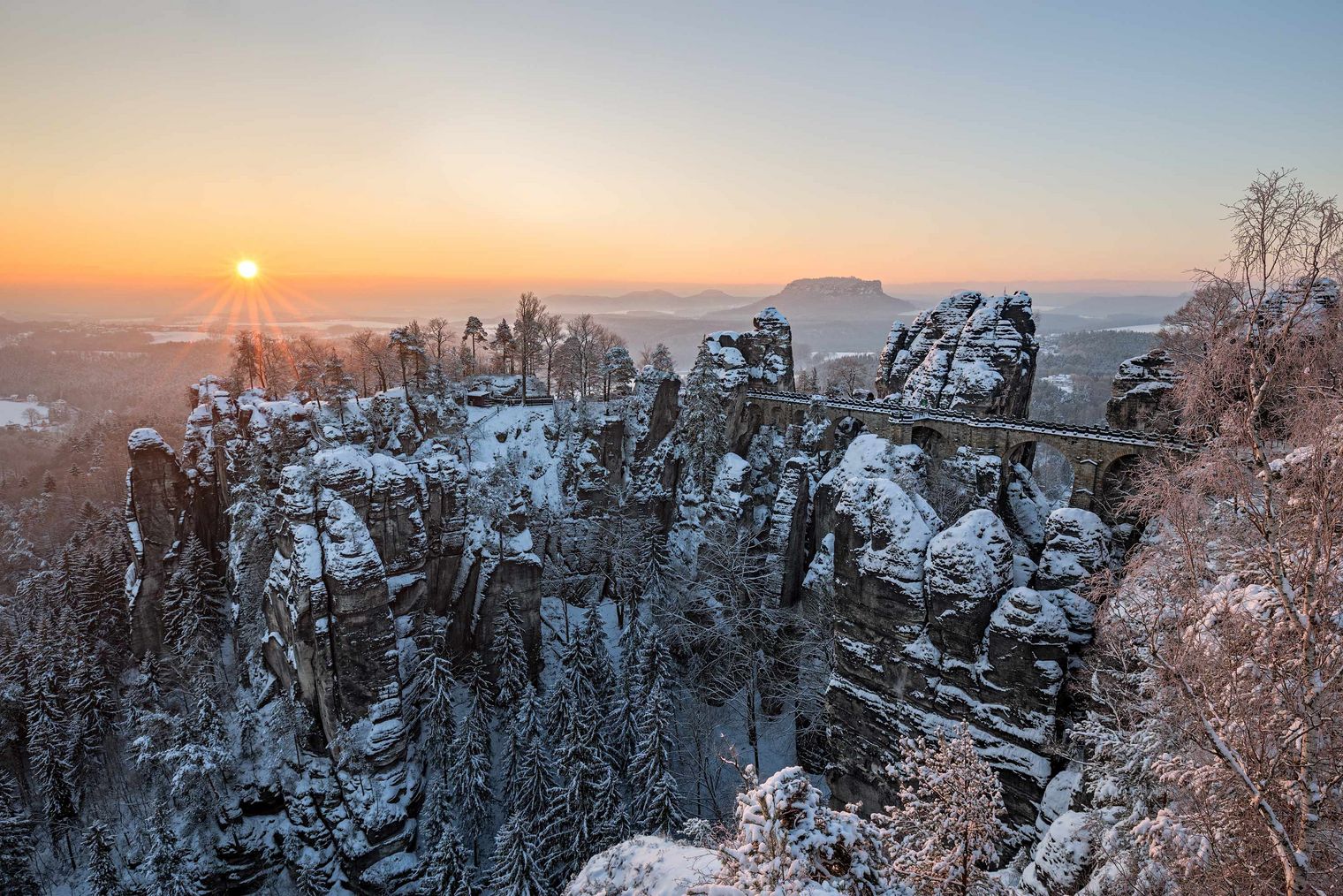
Rocks and Bastei Bridge in winter, covered in snow at sunset
Bastei Bridge in Winter

Winter experiences at the Bastei

Rock Winter in Pirna

A warm glow spills from the shop windows of small boutiques onto the sleet-soaked cobblestones of narrow lanes. Red and yellow Moravian stars shine above romantic courtyards. In cosy cafés, chilled visitors meet for “äm Dässl Heeßn und ä Stückl Eierschegge” — a cup of coffee and a slice of traditional Saxon cake: Pirna is Saxon conviviality set in stone. The streets and buildings of the historic old town evoke an era when pedestrians and horse-drawn carriages determined the pace of a city.

Pirna is almost 800 years old, and every corner of this jewel on the Elbe tells a part of its long and multifaceted history. The town is small enough for a relaxing break yet large enough to offer culture, creativity and cuisine throughout the year. As the gateway to Saxon Switzerland, Pirna is an ideal base for excursions into the surrounding area. Dresden is just a stone’s throw away to the west, while the winter hiking landscape of the Elbe Sandstone Mountains lies within easy reach to the east. Discover a small town with a big heart!

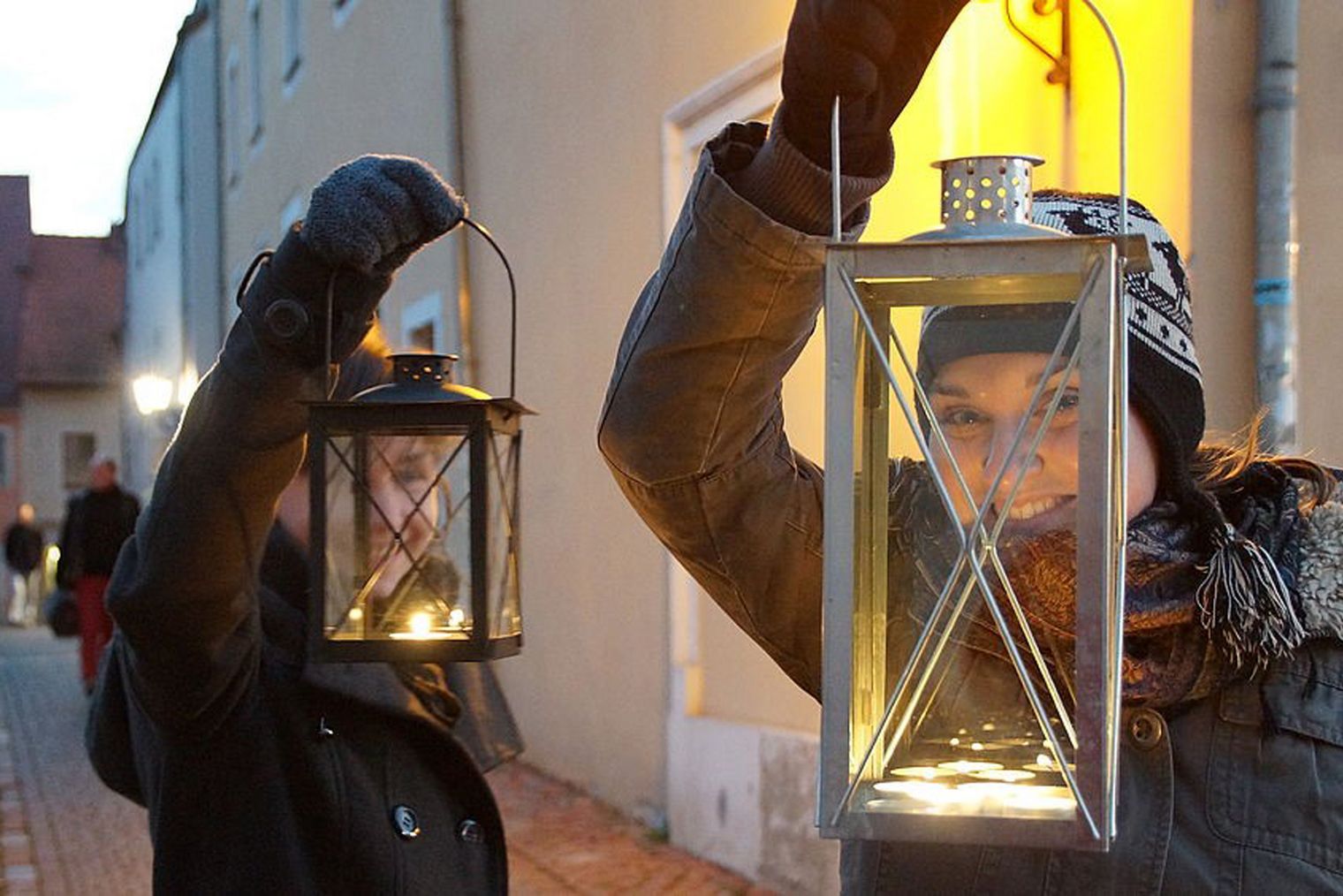
Lantern-Bearer Tour of Pirna with Lanterns, 2 People
Lantern-Bearer Tour of Pirna

Winter experiences in Pirna

Rock winter in Königstein

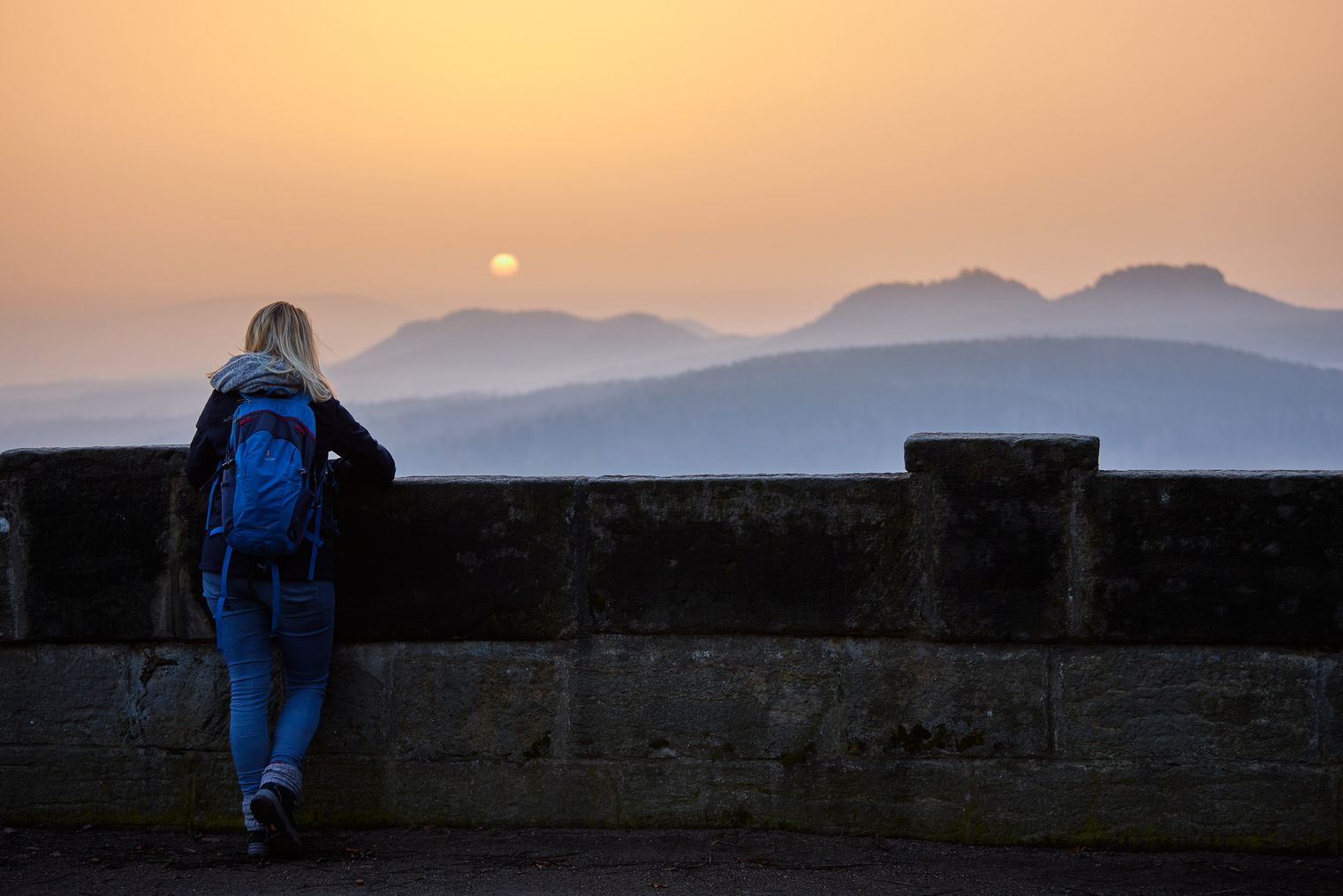
From November onwards, when wisps of mist drift across the Elbe Valley at sunrise, the rocky landscape takes on a mystical beauty. Even the mountain fortress seems to breathe a sigh of relief. Those wishing to take a break will find a blend of nature, culture and cuisine here. Visitors seeking relaxation can discover secluded favourite spots undisturbed, roam the fortress forest, explore the exhibitions or warm up in a rustic tavern. A walk along the fortress wall is also highly recommended, offering visitors a fantastic panoramic view from 247 metres above the Elbe. 

The bizarre rocky landscape now reveals its wildly romantic side. Throughout the table mountain, unique photographic opportunities abound, unobstructed by tourists. Only during the historic and romantic Christmas market, “Königstein – A Winter’s Tale”, does the 9.5-hectare fortress plateau briefly come alive. Surrounded by magnificent cultural heritage, it ranks among Germany’s most beautiful Advent markets. Yet Königstein is more than just the fortress. The town, only a few kilometres away, also celebrates winter. Its ice rink invites visitors to skate beside the Elbe. Königstein is simply beautiful in winter!

Sunrise view of Königstein Fortress
View of Königstein Fortress

Winter experiences in Königstein

Rocky winter in Gohrisch

That moment when a crisp cube of white bread sinks into melted cheese, only to reappear shortly afterwards as a steaming, deliciously fragrant morsel; accompanied by fresh mountain air, candlelight, a robust red wine and a tiled stove with a crackling wood fire: an evening in a mountain lodge with Swiss cheese fondue at the Papststein mountain inn in Saxon Switzerland must surely be one of the most delightful ways to round off a winter hike. The Papststein is the most popular excursion mountain in the municipality of Gohrisch, and its rustic mountain inn is legendary.

The region in the south of Saxon Switzerland, somewhat removed from the main tourist routes, is also known as the “Realm of Stones”. It owes this name to the fact that its heart, the village of Gohrisch, is encircled by half a dozen table mountains. This makes the region a particularly appealing destination for winter hiking. Dense forest, open countryside and magnificent views alternate along the way. Those seeking a challenge can even conquer several summits in a single hike. The crowning glory of a winter break in Gohrisch is a cross-country skiing tour beneath the table mountains.

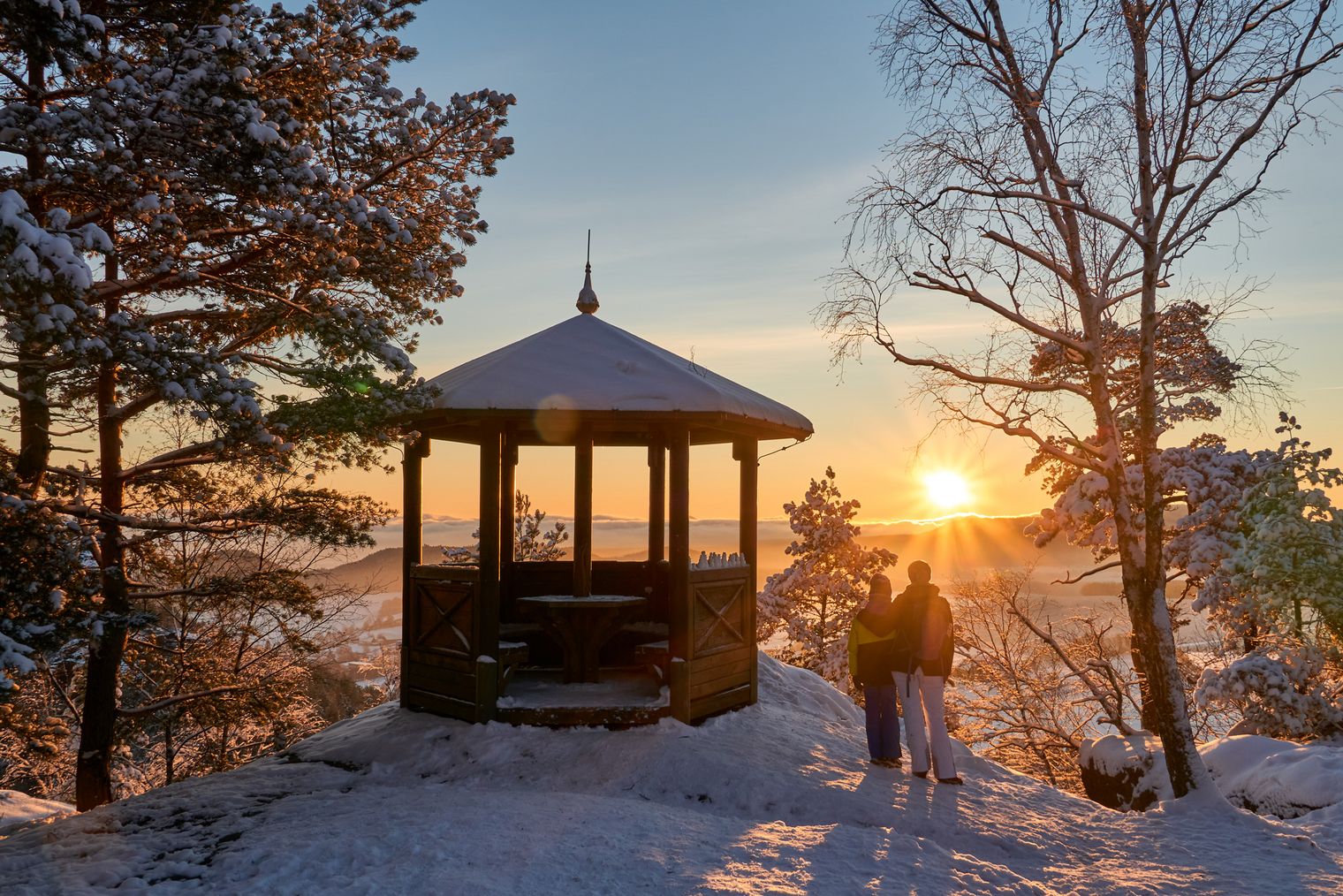
Winter landscape with a pavilion and two people watching the sunset.
Sunrise on the Gohrisch

Winter experiences in Gohrisch

  • experience a sunrise on Gohrisch

  • spend a cosy evening enjoying cheese fondue at the mountain restaurant on Papststein

  • Sunday brunch at Quartier 5

  • experience the magnificent views from Papststein and Kleinhennersdorfer Stein on a guided winter hike

Rocky winter in Kurort Rathen

It is a magical moment: slowly and almost silently, the historic reaction ferry glides across the Elbe. Propelled solely by the force of the water, it carries passengers into the heart of a picture-postcard landscape of rocks, forest and a handful of houses. The river glistens peacefully in the winter sun. On the opposite bank, the Bastei massif rises like a wall into the sky. And the crossing is more than just a necessity. It is also a ritual – an invitation to slow down.  

The open-air theatre, Amselsee lake and the “Schwedenlöcher” gorge on one side, and the Rauenstein with its magnificent ridge trail on the other: Kurort Rathen, with its two districts separated by the Elbe, is a tourist hotspot in summer. Tourism in the region began here more than 200 years ago. To this day, Saxony’s smallest municipality remains a must-see destination. As a retreat during the colder months, however, the spa resort is still something of an insider tip. Here, connoisseurs of tranquillity and winter romantics have the place to themselves. Enchanting winter hiking trails on both sides of the Elbe, breathtaking panoramas, crystal-clear air and welcoming, easy-going hosts – Kurort Rathen delivers what its ferry promises: a slower pace of life. 

Rock Winter in Bad Gottleuba - Berggießhübel

The crystal-clear Gottleuba flows peacefully from the Eastern Ore Mountains towards the Elbe. Over the millennia, it has shaped a delightful setting: its valley is a romantic hiking area offering ever-changing impressions. Iron ore mining brought vitality and prosperity, while mineral springs gave rise to a flourishing spa industry. The twin spa town of Bad Gottleuba-Berggießhübel embodies and recounts this fascinating past.

Whether the Elbe Sandstone Mountains or the Ore Mountains, Saxony or Bohemia, a health retreat or hiking holiday, wellness or culture, above or below ground: the small town, with its two historic centres and the “Marie Louise Stolln” visitor mine, offers all these options. Even in winter. A dense network of well-signposted hiking and therapeutic trails invites visitors to explore the varied landscape even during the colder months. Music nights, traditional miners’ Christmas gatherings, Advent markets, carnival events, piano recitals, readings, a wide range of evening concerts, and restaurants serving excellent regional cuisine also make long evenings pass pleasantly.

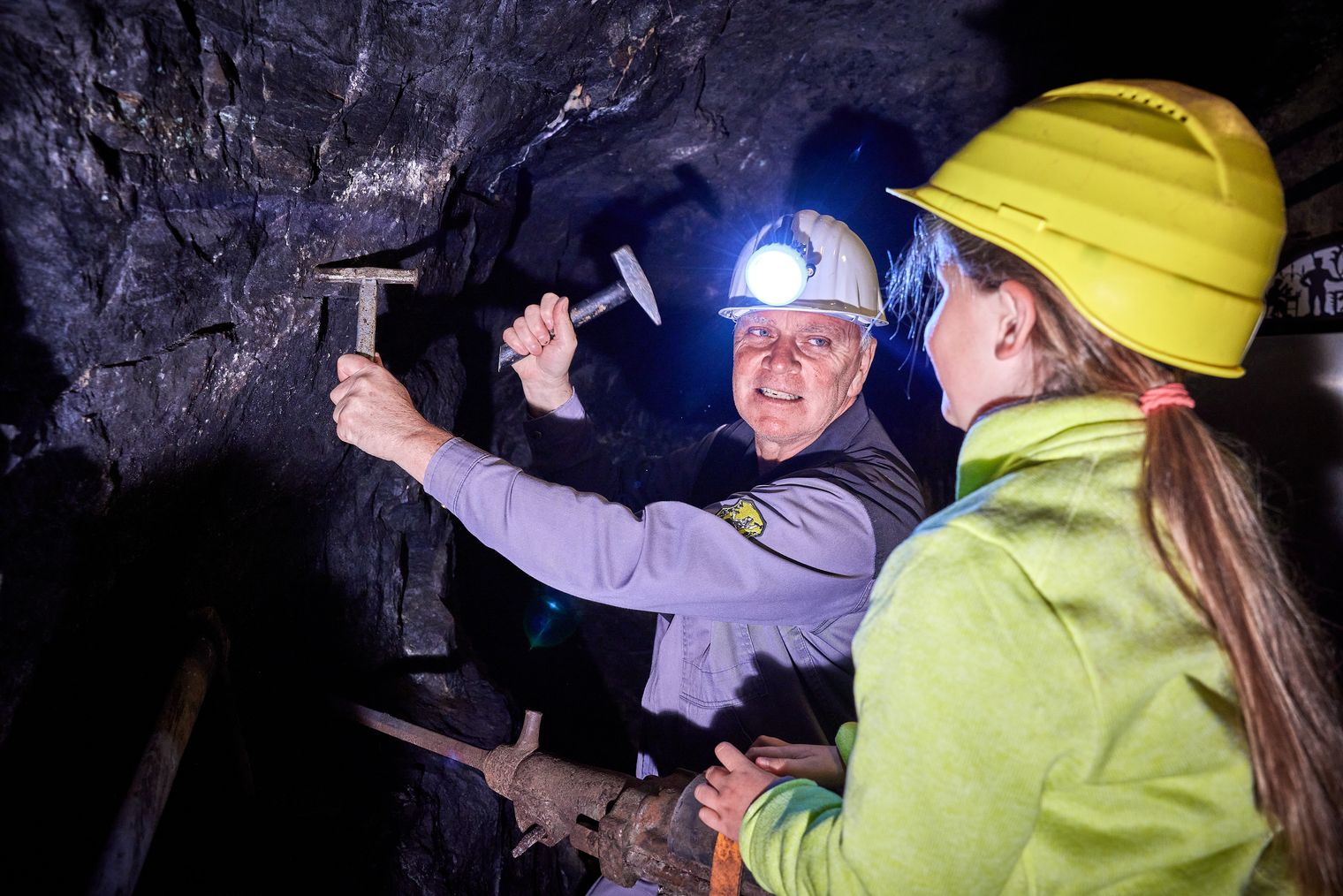
Two people in a mine, one wearing a helmet and headlamp and striking a rock with a hammer.
Children's Tour of the "Marie Louise Stolln" Visitor Mine

Winter experiences in Bad Gottleuba-Berggießhübel

Rocky winter in the Kirnitzsch Valley

A little jolting and squeaking is only to be expected when the venerable old lady leans into a bend. Perfectly legitimate at her age. Just think of all she has witnessed! The German Empire, world wars, floods, rockfalls, mudslides and film productions. The world and the fashions of day-trippers have changed since the Kirnitzschtal tramway's maiden journey in 1898. What remains is the breathtaking charm of the valley and its leisurely mode of transport. Both invite visitors to slow down, especially in winter.

One of the most beautiful and varied winter hiking areas in the Elbe Sandstone Mountains extends along both sides of the River Kirnitzsch. Schrammsteine, Kuhstall, Bärenfangwände, Hinteres Raubschloss and Großer Zschand: some of the region's most spectacular destinations can be reached from here. Numerous lovingly run inns, guest houses and hotels offer weary and hungry hikers a warm welcome all year round. A genuine recommendation for city dwellers seeking a relaxing escape!

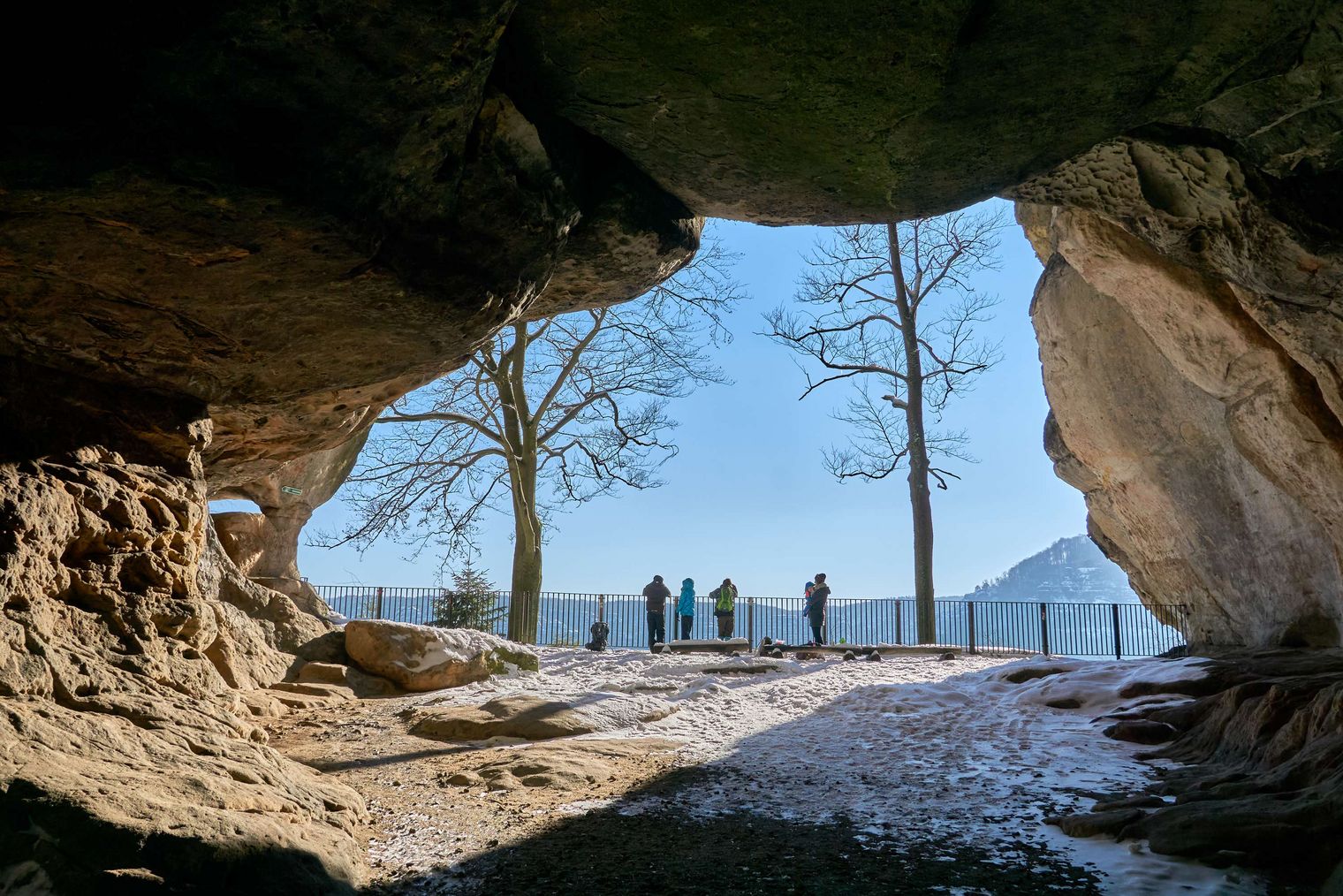
View from the Kuhstall rock arch towards trees and a group of people outdoors.
Kuhstall in winter

Winter experiences in the Kirnitzsch Valley

  • ride the squeaky Kirnitzsch Valley tram

  • enjoy wonderfully fragrant waffles at the Bergwirtschaft am Kuhstall

  • Culture in the Lodge - Lodge ambience combined with culture at the Ottendorfer Hütte

  • Goose Stories at Forsthaus Kirnitzschtal

  • experience an impressive guided winter hike through the Kirnitzsch Valley, featuring unique panoramic views and a relaxing conclusion in the winter village of Schmilka

  • Experience Dinner at the restaurant by the Lichtenhain Waterfall

Rocky winter in Sebnitz

In loving hands, a rose blossom emerges leaf by leaf within minutes. There are only a few places left worldwide where this fascinating process can be observed. One of them is Sebnitz. The art of silk flower making has been practised here since 1834. The Deutsche Kunstblume Sebnitz manufactory offers fascinating insights into this rare craft. Combined with interesting museums and the SoliVital sports and leisure centre, this makes the town a worthwhile destination whatever the weather. 

Every Advent, a beautiful and little-known form of local Christmas folk art enchants children and adults alike: the Sebnitz shadow plays. Candlelight brings intricate papercut scenes to life. The tranquil Christmas market on the second weekend of Advent is also dedicated entirely to this tradition, which is unique in Germany. Yet the town’s real asset is its location. The ‘German Hiking Capital 2016’ is an ideal starting point for winter excursions to particularly peaceful corners and secluded spots in the national park region. Nowhere else will you find more of Saxon Switzerland!

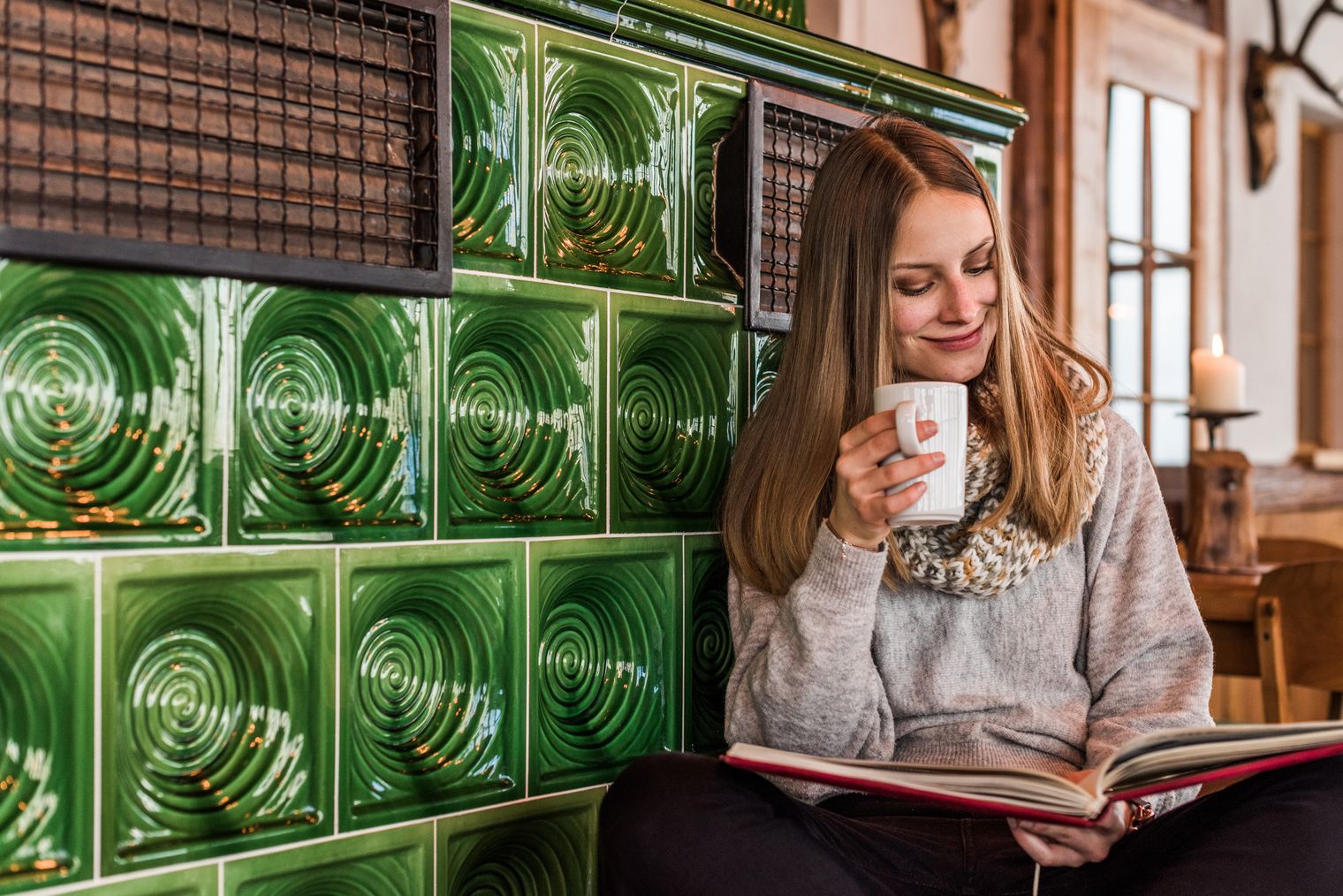
A woman holding a coffee cup sits by the green tiled stove at the Wachbergbaude and reads a book.
Fireplace at the Wachbergbaude

Winter experiences in Sebnitz

  • learn more about the tradition of paper cutting at the Tannert dinner

  • drink hot chocolate by the fireplace at the Wachbergbaude

  • listen to fascinating stories about Hinterhermsdorf during a winter stroll through the village

  • romantic wellness at the KräuterVitalbad

  • Cross-country skiing in Sebnitz Forest, Hinterhermsdorf and around Wachberg

  • Alpaca hikes from the Kräuterbaude

  • enjoy the panoramic villages and impressive views of the rocky landscape on a guided winter hike along the Panorama Trail

Rocky winter in Hohnstein

What a panorama! In the foreground are rocks and wooded valley slopes, beyond them plateaus dotted with fields and small houses adding splashes of colour, while in the distance rises a backdrop of imposing table mountains. From the Brand near Hohnstein, the natural beauty of the Elbe Sandstone Mountains reveals itself majestically in its winter slumber. Its spectacular 180-degree panorama has earned the viewpoint the epithet ‘Balcony of Saxon Switzerland’. The route here from the castle town is one of the most popular trails for winter hikers: easily accessible, well maintained and with a cosy mountain inn where a fire crackles in the hearth.

Hohnstein and the surrounding area attract visitors all year round with this and other delightful tours. The principal hiking attraction is the Saxon Switzerland National Park, which begins here and features idyllic ravines and valleys as well as the mysterious Gautschgrotte cave, where an enormous column of ice forms in some winters. The local tradition of puppet carving and puppetry centred around the famous Kasper is also well worth exploring. In Hohnstein, wilderness and craftsmanship exist side by side.

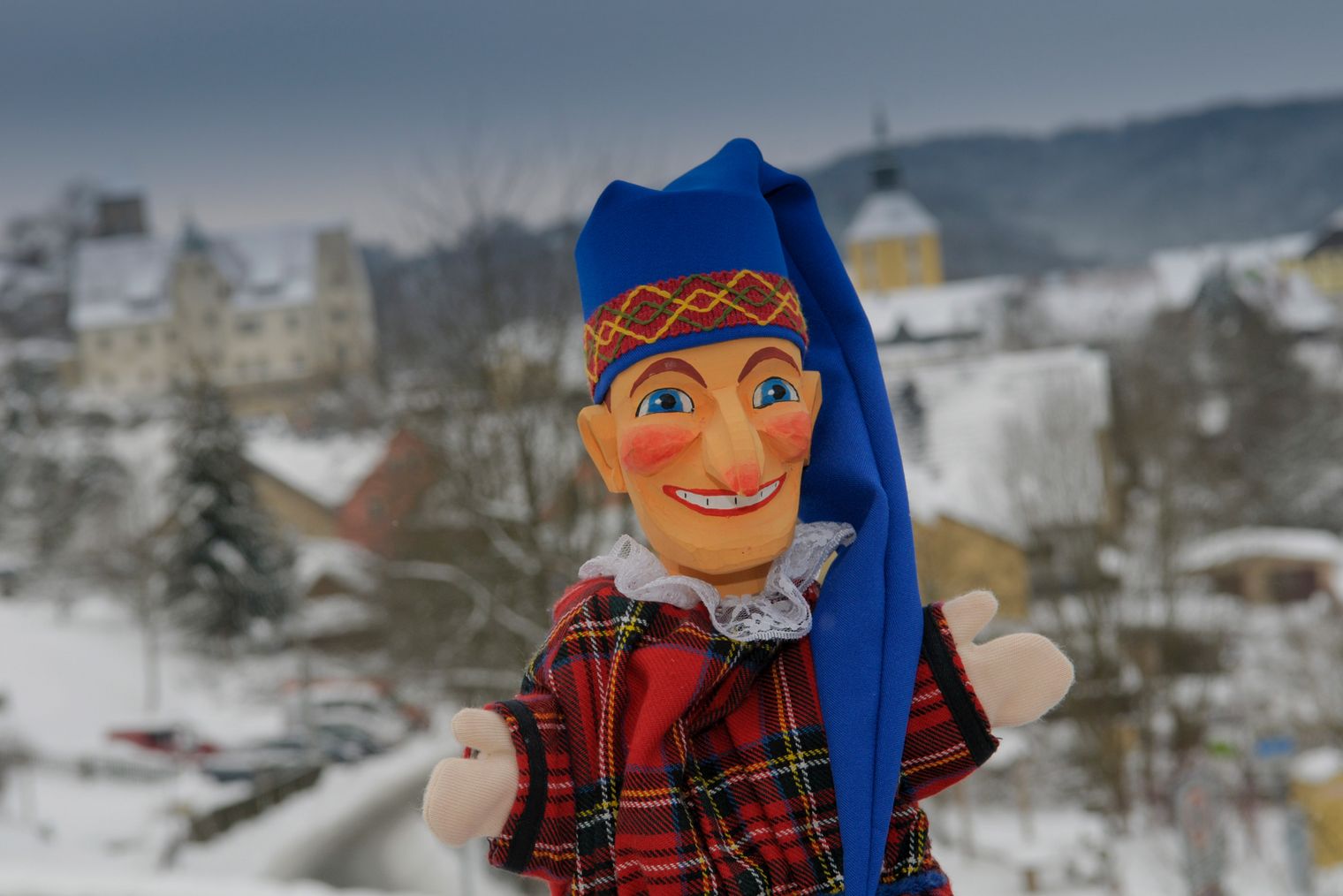
Puppet wearing a blue cap and red outfit in front of a snow-covered cityscape.
Hohnstein Punch

Winter experiences in Hohnstein

  • experience a weekend full of magic and variety at the Hohnstein Fairytale Sparkle

  • meet the Hohnstein Punch at the Max Jacob Theatre

  • marvel at the mysterious Gautsch Grotto

  • enjoy the wildly romantic Hohnstein region in the tranquillity of winter on a hike with warming mulled wine while listening to stories and poems

Rocky Winter in Neustadt

Is there a treasure lying dormant beneath Neustadt in Saxony? Quite possibly! For centuries, miners and fortune seekers searched for gold here, on the border between the Elbe Sandstone Mountains and the Lusatian Highlands – and occasionally found it. Yet the work was arduous and the yield meagre. To this day, no one has struck the vein of gold believed to exist here. This also had its advantages: the tranquil small town was thus spared disruption.

Thanks to its peripheral location, Neustadt is considered an insider tip among winter holiday destinations in Saxon Switzerland. Those seeking peace and quiet will find it on one of the secluded winter hiking routes through the idyllic surroundings. Excursions to the Unger (538 metres) or the Götzingerhöhe (425 metres) are particularly popular. The tropical Mariba sauna and bathing paradise and the Neustadthalle, with its diverse cultural programme, attract visitors from beyond the region. The area also features one of the few ski slopes with a lift. And the story of the gold? It is told in the local Gold Museum.

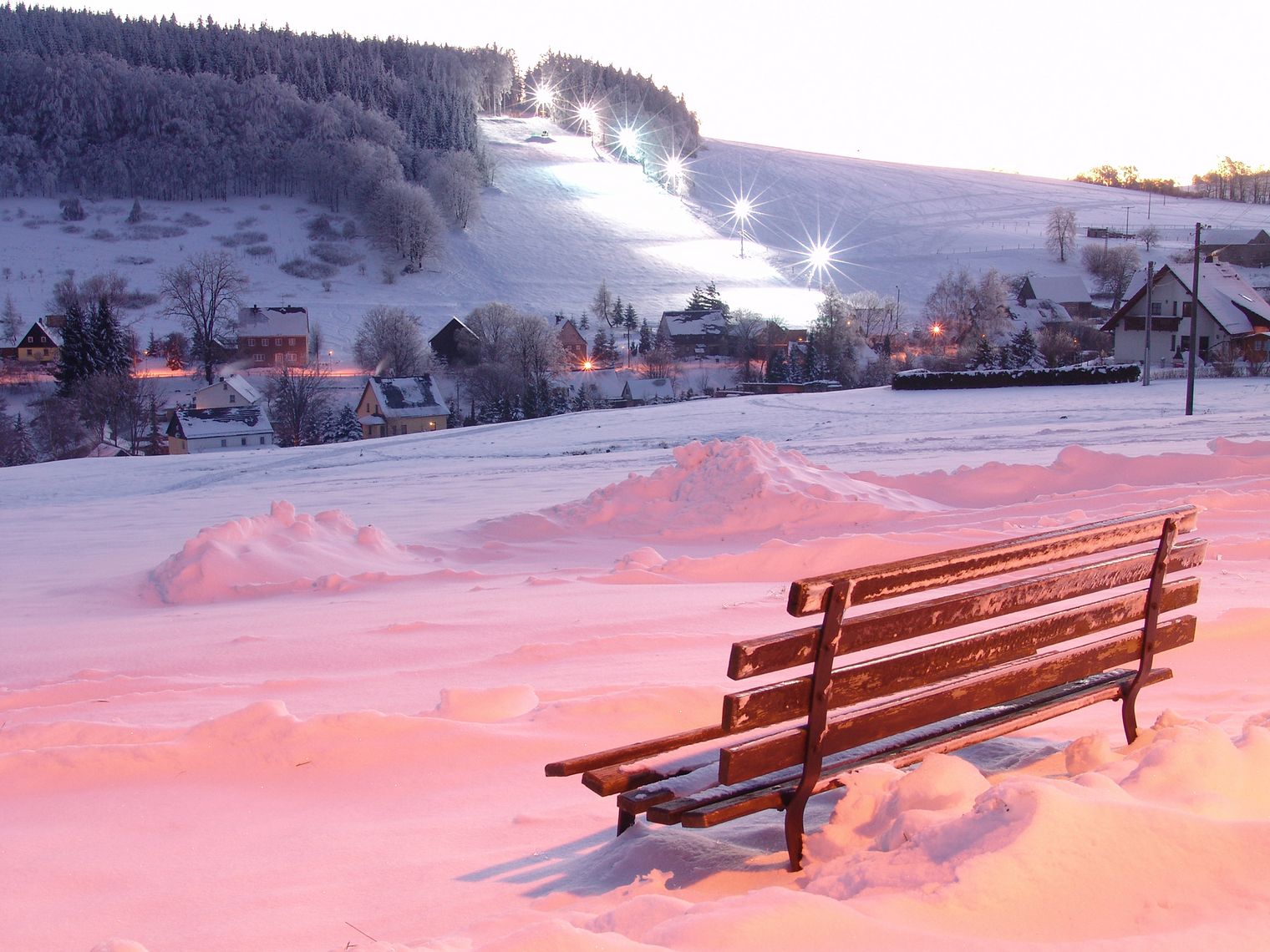
Snow-covered landscape with a wooden bench in the foreground and snow-covered hills in the background. Ski slope in Rugiswalde
Ski slope in Rugiswalde

Winter experiences in Neustadt

Winter among the rocks in Rosenthal-Bielatal

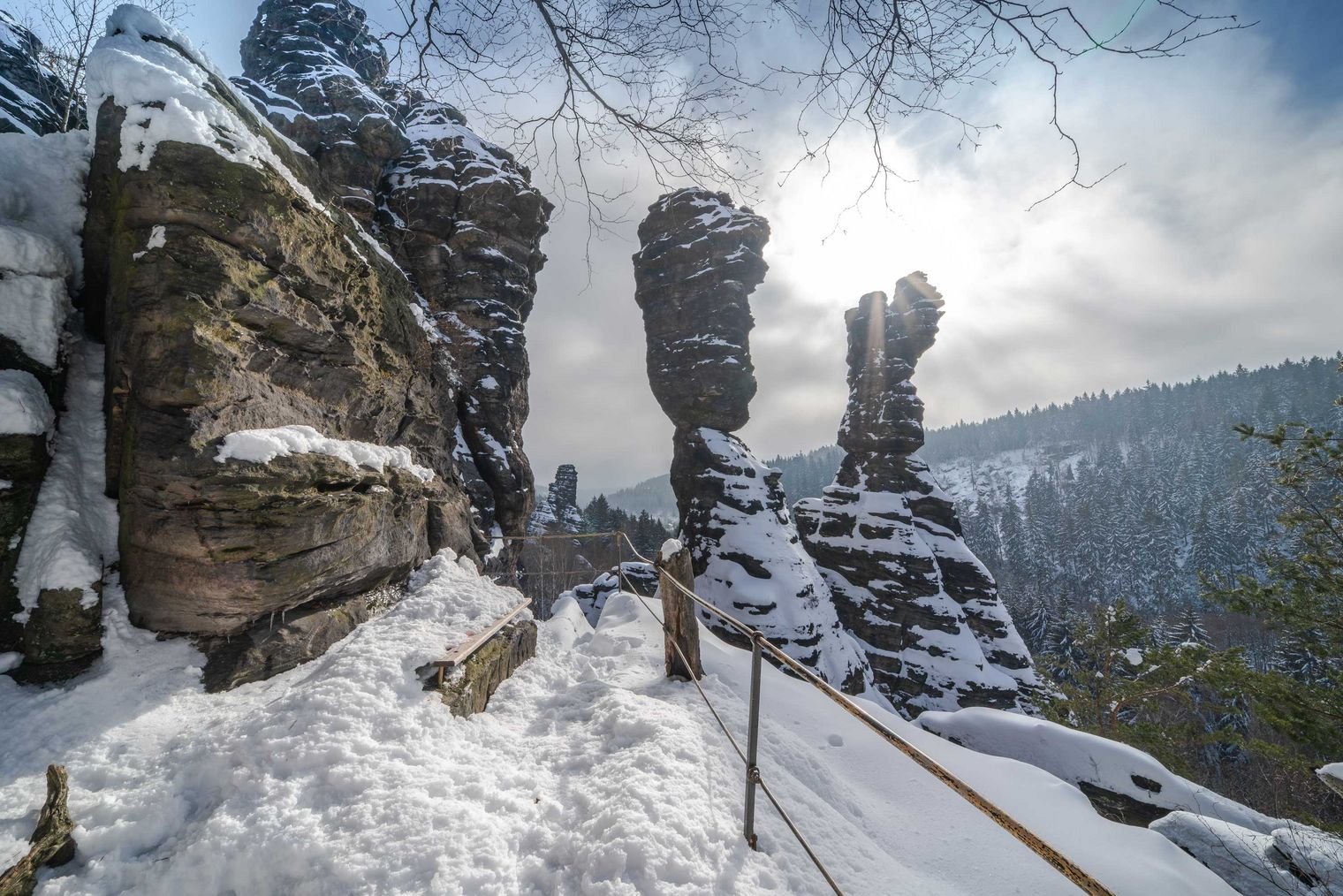
What fascinating formations! Two mighty rock pillars rise into the winter sky like weathered statues, slightly askew and with heads that seem far too heavy. This makes them appear both strong and fragile. The “Pillars of Hercules” are among the most spectacular rock formations in Saxon Switzerland. They are not only popular climbing peaks, but also the landmarks of a winter hiking paradise that remains something of an insider’s secret: Rosenthal-Bielatal.

The municipality lies in the south of the region, almost on the Czech border, somewhat removed from the usual tourist trails. Those seeking tranquillity will find it here. It is often possible to hike for hours without encountering another soul. At the same time, the landscape displays a diversity found in scarcely any other part of the Elbe Sandstone Mountains.
Open hills, a rugged rocky landscape and deeply incised valleys with babbling brooks continually create new picturesque scenery. There are also adventurous paths with steps and ladders leading high up to inspiring views. And those staying in Rosenthal-Bielatal can set off straight from their doorstep. So lace up your hiking boots and embrace the joys of winter walking!

Snow-covered rocky landscape in the Biela Valley, with rays of sunlight and a cloudy sky in the background.
Pillars of Hercules

Winter experiences in Rosenthal-Bielatal

  • winter hiking to the Hercules Pillars in the wildly romantic Bielatal valley

  • enjoy moments of relaxation in the Finnish log cabin sauna at the Forsthaus

  • learn more about the history & culture of the region on a guided winter hike

Rock winter in Stolpen

Stolpen is fascinating. Angular columns made of a hard, black material from deep within the earth can be found throughout the town. They are the remnants of a massive volcanic eruption that occurred many millions of years ago. It was here that the rock was first studied and named “basalt”. The 800-year-old settlement, with its curiously sloping market square and handsome townhouses, has countless other captivating stories to tell: of Slavs, Hussites, the French and Prussians, of plague, urban fires and sieges. Yet most visitors are interested in only one: the tragedy of Countess Cosel. Her moving fate is the principal theme of the castle museum.

Yet Stolpen is not merely about geology and history. Stolpen is also a centre of arts and crafts. It is an important location for traditional folk art from the Ore Mountains in the region. At the Ratags demonstration workshop, delicate fretwork and woodturning are used to create intricate candle arches, pyramids, incense smokers and much more. Every day except Monday, visitors can watch the craftswomen create imaginative, three-dimensional one-of-a-kind pieces from countless individual components. Afterwards, the factory shop offers the full range produced by this long-established company.

Rock winter in Weesenstein

Weesenstein Castle rises majestically upon a mighty rock above the romantic Müglitz Valley, regarded as the most beautiful valley in Saxony. This place possesses a special enchantment, particularly during the winter months. Though seemingly dormant from the outside, life pulses within the castle walls. A wide range of events and guided tours attract numerous visitors. Advent readings and concerts, the children’s New Year’s Eve celebration popular with the whole family, the Weesenstein Witches’ Carnival, as well as exhibitions and matinées, provide cultural highlights on the fringes of Saxon Switzerland and the Eastern Ore Mountains.

Rock winter in Reinhardtsdorf-Schöna

The fire crackles invitingly in the fireplace of the former stable, now converted into a cosy dining room. A mug of hot chocolate steams enticingly between your hands. What a welcome treat after an extended winter ramble! Situated in a somewhat secluded spot on a plateau about 200 metres above the Elbe Valley, Reinhardtsdorf-Schöna is an insider tip for those who relish winter, while the fireside room at the Ehrlich family’s Gasthaus Zirkelstein is perhaps the cosiest place in the village to warm up.

Reinhardtsdorf-Schöna is also known as the “municipality of five rocks”. This refers to the table mountains of Zirkelstein, Kaiserkrone, Großer and Kleiner Zschirnstein, and Wolfsberg. Each one is a rewarding winter hiking destination. The Malerweg trail through the Elbe Sandstone Mountains passes directly through the village. It is also home to an enchanting rural Baroque church. Reinhardtsdorf-Schöna is a destination for independent travellers who know exactly what they want: tranquillity, wide-open spaces, authentic village life – and genuine hospitality.

Rock winter in Wehlen

In winter, the miniature park in Wehlen is bathed in a truly special light! Changing lighting moods with striking colour transitions lend the sculpted model landscape, planted with bonsai trees, a particularly distinctive effect. Through the interplay of colour, light and shadow take on an entirely new significance during the darker months. A leisurely ride on the park railway offers visitors a unique immersion in colour amid the miniature landscape. Refreshments are also provided! New sandstone models for the miniature park are meticulously handcrafted in the workshop. In addition, unique decorative objects and works of art are continually crafted from our local sandstone and can also be personalised upon request.

Rock winter in Rammenau

The special charm of Rammenau Baroque Palace lies in the harmonious interplay of Baroque architecture, Neoclassical ornamentation and the idyllic landscape. Even during the colder months, the Baroque palace offers a wide range of activities. Gourmets can enjoy breakfast and brunch in a historic setting or attend cookery evenings. Younger visitors can look forward to children’s palace tours and baking activities. During the annual St Nicholas’ Workshop, the palace hosts a Christmas market featuring traders from the region. 

However, a visit is also worthwhile outside of scheduled events: the palace’s artistically decorated rooms invite visitors to explore and discover – in the palace’s Chinese Salon in particular, there are always new details to uncover in the elaborately painted canvas wall coverings. Afterwards, visitors can enjoy delicious cake and coffee in the historic dining rooms of the palace café.