© Florian Trykowski

Orientation

Hiking Bliss in the Elbe Sandstone Mountains

The Saxon Switzerland is simply a hiker's paradise! The forest and rock-rich national park region is crisscrossed with a network of well-marked trails.

Many generations have worked on it with passion: putting up signposts, laying boards, building railings, bridges, ladders, stairs, benches, and viewpoints, and placing markings on rocks and trees. This is how one of Germany's most exciting hiking areas was created.

On the German side of the Elbe Sandstone Mountains alone, there are over 1,000 kilometers of marked trails! Most are also suitable for winter hiking. Every official hiking trail is marked with a symbol that can be found at every fork or intersection.
Arrival

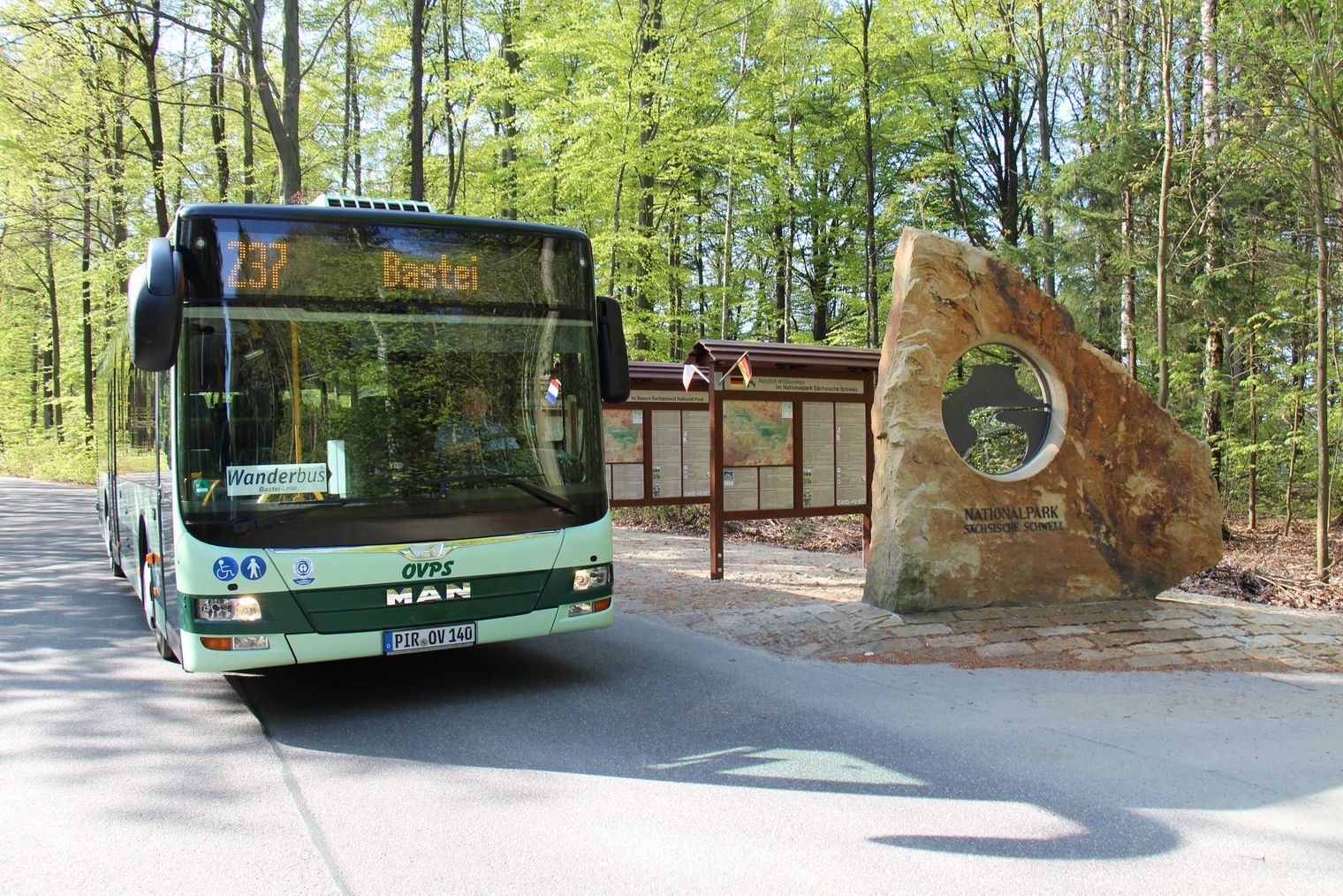
The Saxon Switzerland is easily accessible – whether by train, car, or public transport. The region is located about 30 kilometers from Dresden and approximately 150 kilometers from Prague and is well connected to the regional and long-distance transport network. On-site, S-Bahn, hiking buses, and ferries ensure a comfortable onward journey to the main tourist destinations. For overnight guests in most municipalities of the region, using public transport with the guest card is even possible without additional costs.

GrĂŒner WanderBus fĂ€hrt an einer Haltestelle mit WartehĂ€uschen und BĂ€umen vorbei.
© Solveig Grosser

Brief Guide to Signposts

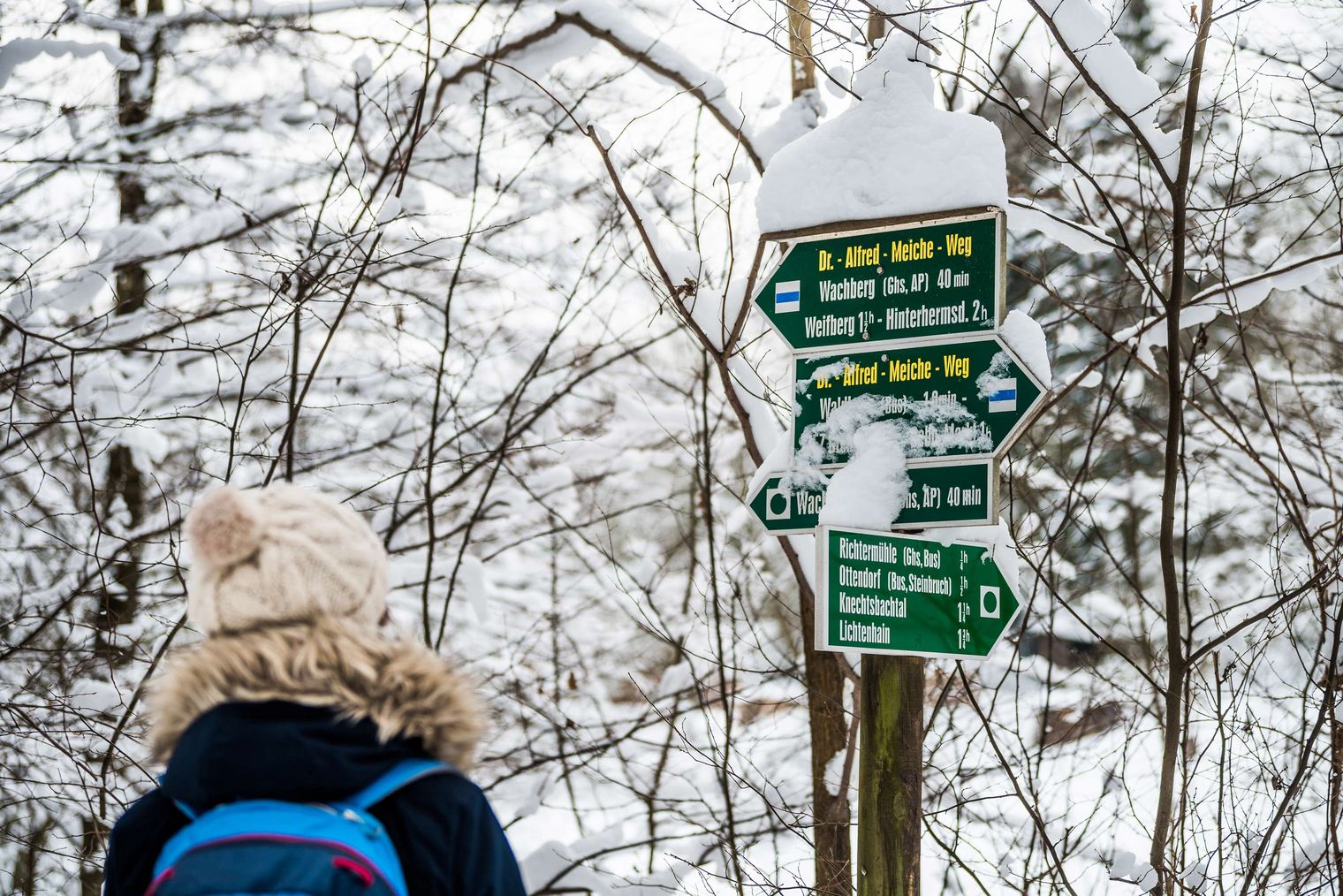
Signposts sometimes reveal more than one might think – if you know how to interpret the signs:

  • »AP«       Viewpoint
  • »Ghs«      Inn
  • »E3«/»EB«  European long-distance trail

The latter leads from the Atlantic through Saxon Switzerland to the Black Sea or from Eisenach to Budapest.

The small yellow signs labeled »Location Number« (at the front or back of the post) help the mountain rescue service to be at the right place more quickly in an emergency.

Hiking trails are marked with lines, slashes, or dots in various colors. A special feature is trail markers with a green arrow. These are mountain paths that require particular surefootedness and a head for heights.

Please note: Paths with a black arrow on a white background are not hiking trails. They indicate access to climbing rocks and are usually dead ends. These paths are reserved for climbers.

Wanderer mit MĂŒtze steht vor einem beschneiten Wegweiser im Wald.
© Sebastian Thiel

Observe Detours

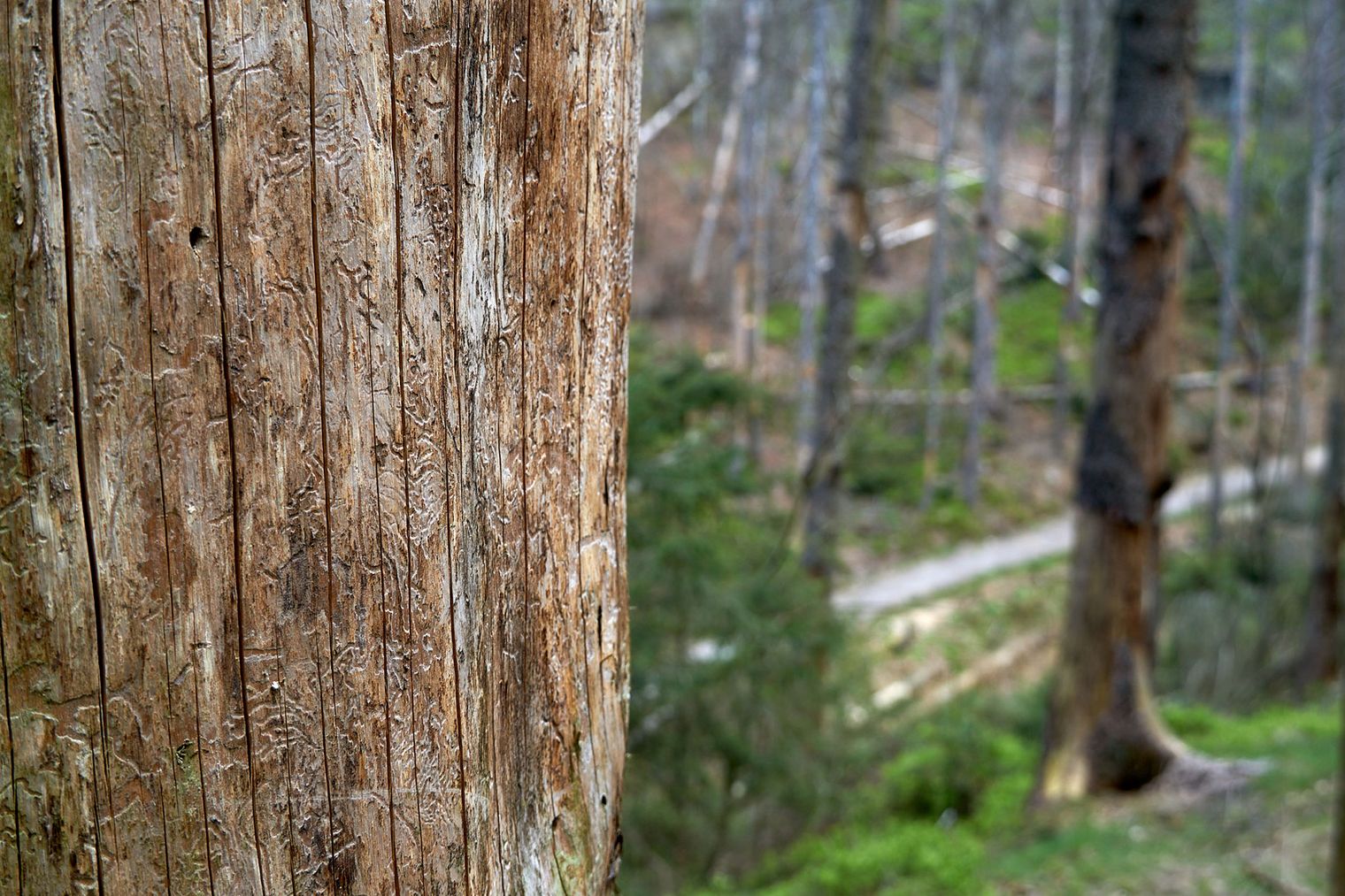
Caution, rotting spruces! Bare branches, brown needles, fallen trees. In some areas of the national park region, the bark beetle is particularly active at the moment. Natural forest development is taking place here: spruce forests are dying off; healthy mixed forests are regrowing. Until this process is complete, special precautions apply here due to the risk of falling trees: avoid the forest during wind, heavy rain, or snow load. Do not stand under broken branches or tree tops. You enter the forest at your own risk.

Please note: individual sections of the path may be temporarily impassable due to fallen trees (bark beetle damage).

Check this homepage for the latest updates before your trip, or inquire at your local accommodation for the current situation.

Nahaufnahme eines Baumstamms mit sichtbarer Rinde, im Hintergrund verschwommene BĂ€ume und ein Weg.
© Yvonne BrĂŒckner

Requirements for Hiking

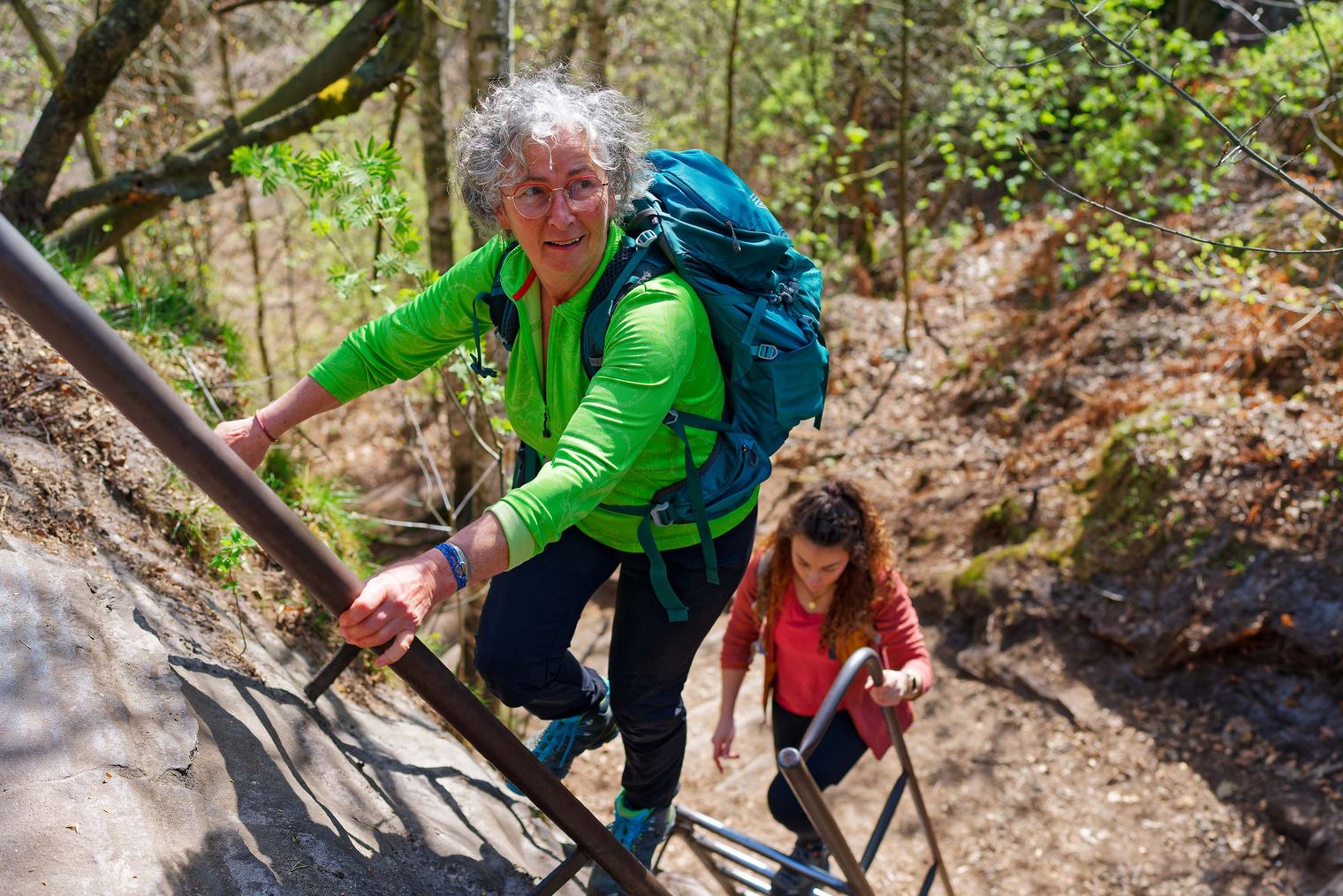
Hiking in Saxon Switzerland is a special nature experience, but depending on the tour, it also requires good preparation. Many trails lead over narrow paths, steps, and ladders through uneven terrain. Therefore, sturdy hiking boots, surefootedness, and a realistic assessment of one's own fitness are important. Anyone planning a tour should consider the length, elevation gain, and weather conditions, and take enough water. This way, the impressive rocky landscape can be enjoyed safely and relaxed.

Zwei Wanderer mit Rucksack kraxeln eine steile Treppe in der Natur hinauf, umgeben von BĂ€umen und Pflanzen.
© Sebastian Thiel

Hiking with Dogs

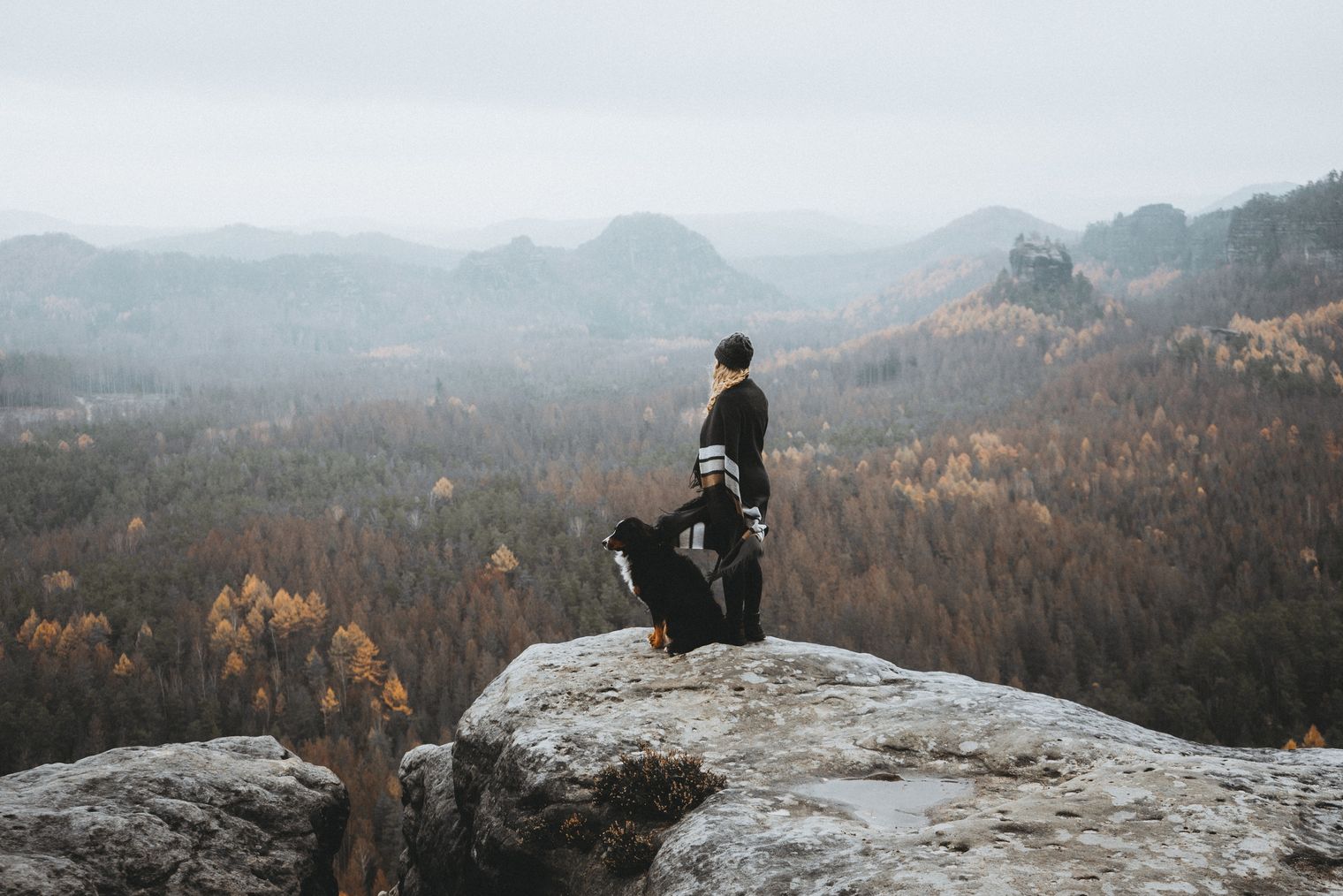
Hiking with a dog in Saxon Switzerland is generally not a problem and for many, it's a special nature experience. To ensure that both the person and the animal can enjoy the tour in a relaxed manner, the route and requirements should be suitably chosen in advance. Not every path is equally suitable for dogs, as narrow trails, many steps, ladders, grids, or challenging rock passages can become obstacles. Therefore, good planning, sufficient water for the dog, and regular breaks are important. To protect nature, wildlife, and other guests, the dog should always be well-controlled and kept on a leash. 

Frau steht mit einem Hund auf einen Felsen und schaut in die Ferne. Es ist nebelig.