© Kenny Scholz

Carl Maria von Weber

in Saxon Switzerland

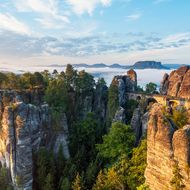
Saxon Switzerland was a place of inspiration and artistic encounter with nature for Carl Maria von Weber. His diaries document stays at the Bastei, in the Uttewalder Grund, in the Amselgrund, in the Liebethaler Grund, and at the Kuhstall. The wild beauty of the rocks, gorges, and forests found its echo in the romantic tonal language of his "Freischütz", whose famous Wolf's Glen scene is shaped by the atmosphere of this landscape. To this day, this work lives on at the Felsenbühne Rathen, where nature itself becomes the stage.

Felsformationen umgeben von Bäumen und Nebel, mit einem blauen Himmel im Hintergrund.
© Rico Richter
"Looking at a landscape is to me like the performance of a piece of music."
Carl Maria von Weber
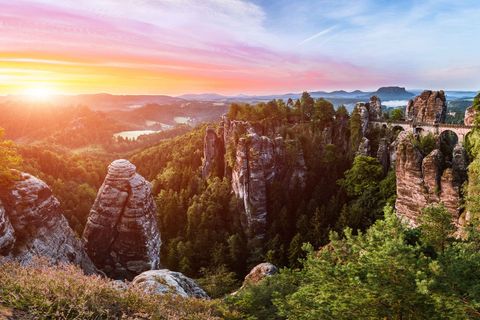
Sonnenaufgang über einer felsigen Landschaft mit Bäumen und einem weiten Blick auf das Tal.
© Kenny Scholz

Bastei

The Bastei, with its spectacular view of the Elbe valley and the bizarre sandstone rocks, is one of the most striking viewpoints in Saxon Switzerland. Carl Maria von Weber visited this place several times – noted, for example, in his diaries from 1818, 1822, and 1823. The rugged rock formations and deep gorges of the Bastei reflect the dramatic romanticism of his "Freischütz" and still offer the same inspiring natural backdrop that fascinated Weber so much.

Learn more
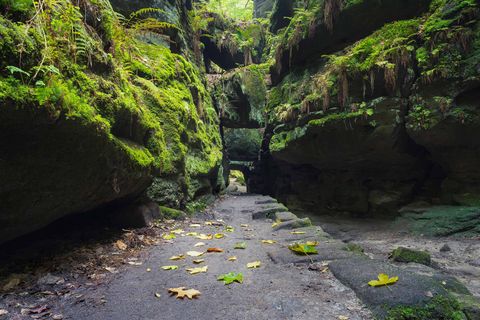
Schmale Schlucht mit grünen Wänden aus Pflanzen und einem kieseligen Boden.
© Philipp Zieger

Uttewalder Felsentor

The Uttewalder Felsentor is one of the most legendary places in Saxon Switzerland. Narrow gorges, moss-covered rock faces, and mysterious shadowed spaces characterize a landscape that seems made for the imagination of Romanticism. Carl Maria von Weber hiked through the Uttewalder Grund in 1818 and recorded this tour in his diary. The mystical atmosphere of the rock gate inevitably brings to mind the Wolf's Glen scene of his "Der Freischütz," in which nature and the supernatural inextricably merge. Anyone who hikes here experiences the same fascination that inspired Weber's music.

Learn more
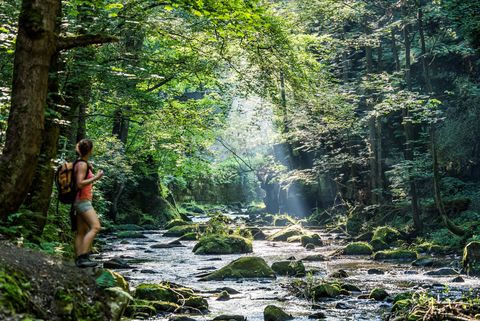
Wanderer steht am Ufer eines klaren Baches, umgeben von dichtem, grünem Wald und Sonnenstrahlen.
© Sebastian Thiel

Liebethaler Grund

On August 15, 1824, Carl Maria von Weber made an excursion to the mill in the Liebethaler Grund – a visit noted in his diaries. The narrow valley with its rock faces and the rushing Wesenitz river offered the composer an impressive backdrop that matched the romantic spirit of his music. Here, for Weber, the originality of nature combined with the quiet seclusion of a retreat. Today, the world's largest Richard Wagner monument in the Liebethaler Grund commemorates another great composer. Wagner deeply admired Weber and saw him as the pioneer of his own art. Thus, nature and music history meet in a unique way in the Liebethaler Grund – with two names that decisively shaped German Romanticism.

Learn more
Blick aus einer Höhle auf eine Landschaft mit Bäumen und einem Berg im Hintergrund.
© parallel dream / #367068297 / stock.adobe.com

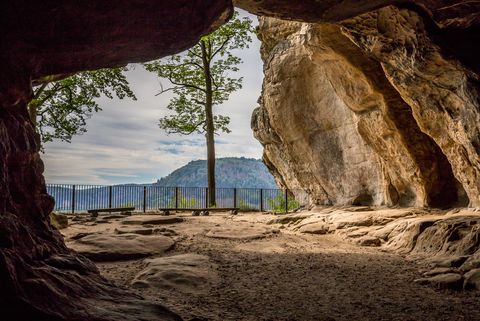
Kuhstall

The Kuhstall, the largest rock arch in Saxon Switzerland, was a popular excursion destination early on in the Romantic period. Carl Maria von Weber was also drawn here: between 1817 and 1825 he immortalized himself in the guestbook of the Kuhstall – direct evidence of his stay at this impressive place. The massive rock opening, which reveals a view into the vast landscape, is symbolic of that connection between the forces of nature and mystery that is also palpable in Weber's music.

Learn more
Freiluftbühne in einer natürlichen Umgebung mit vielen Zuschauern und einer großen Felswand im Hintergrund.
© Michael Schmidt

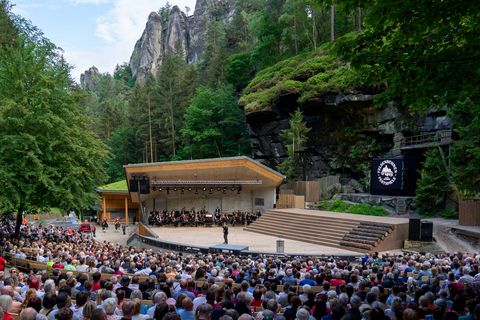
Felsenbühne Rathen

In 1822, Carl Maria von Weber took an excursion through the Amselgrund. Just a few steps away lies the Felsenbühne Rathen, one of the most impressive open-air nature stages in Europe. For many decades, "Der Freischütz" has been performed here in a setting that seems made for Weber's romantic world of sound.

Learn more

Event Highlights 2026

Zwei Personen stehen vor einer Felswand und interagieren mit einem Instrument.
© Martin Förster

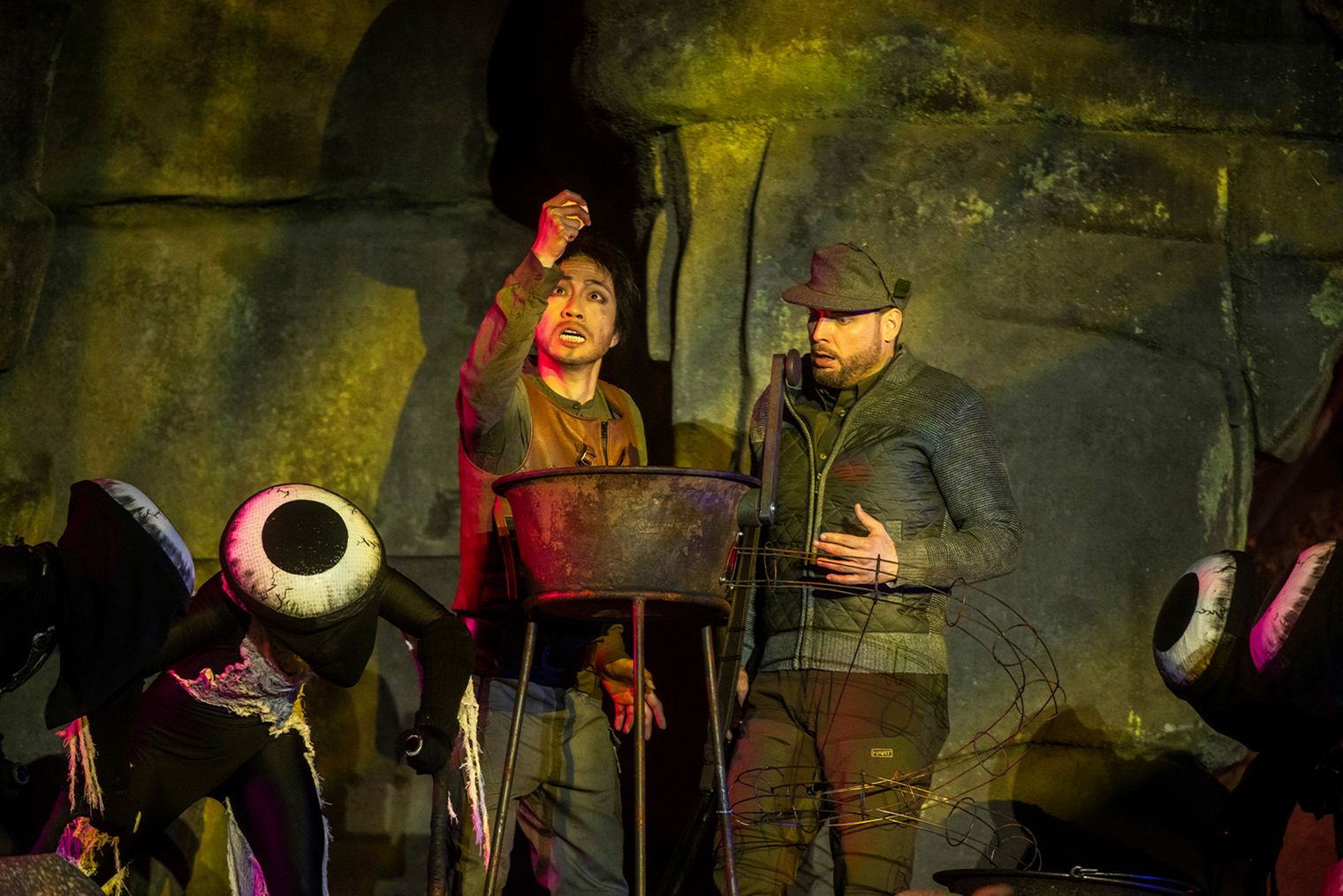
Der Freischütz at the Felsenbühne Rathen

The Felsenbühne Rathen is considered one of the most impressive natural stages in Europe – and is closely connected to Carl Maria von Weber. In particular, his opera "Der Freischütz", which is considered the epitome of German romantic opera, has been performed here for decades. The wild rocky landscape and the mysterious forests around Rathen form a perfect backdrop for the Wolf's Glen scene, which seems to have been made for this place.

Historisches Gebäude mit rotem Dach, umgeben von Wasser und Bäumen, im Hintergrund blauer Himmel.
© Anna Meurer

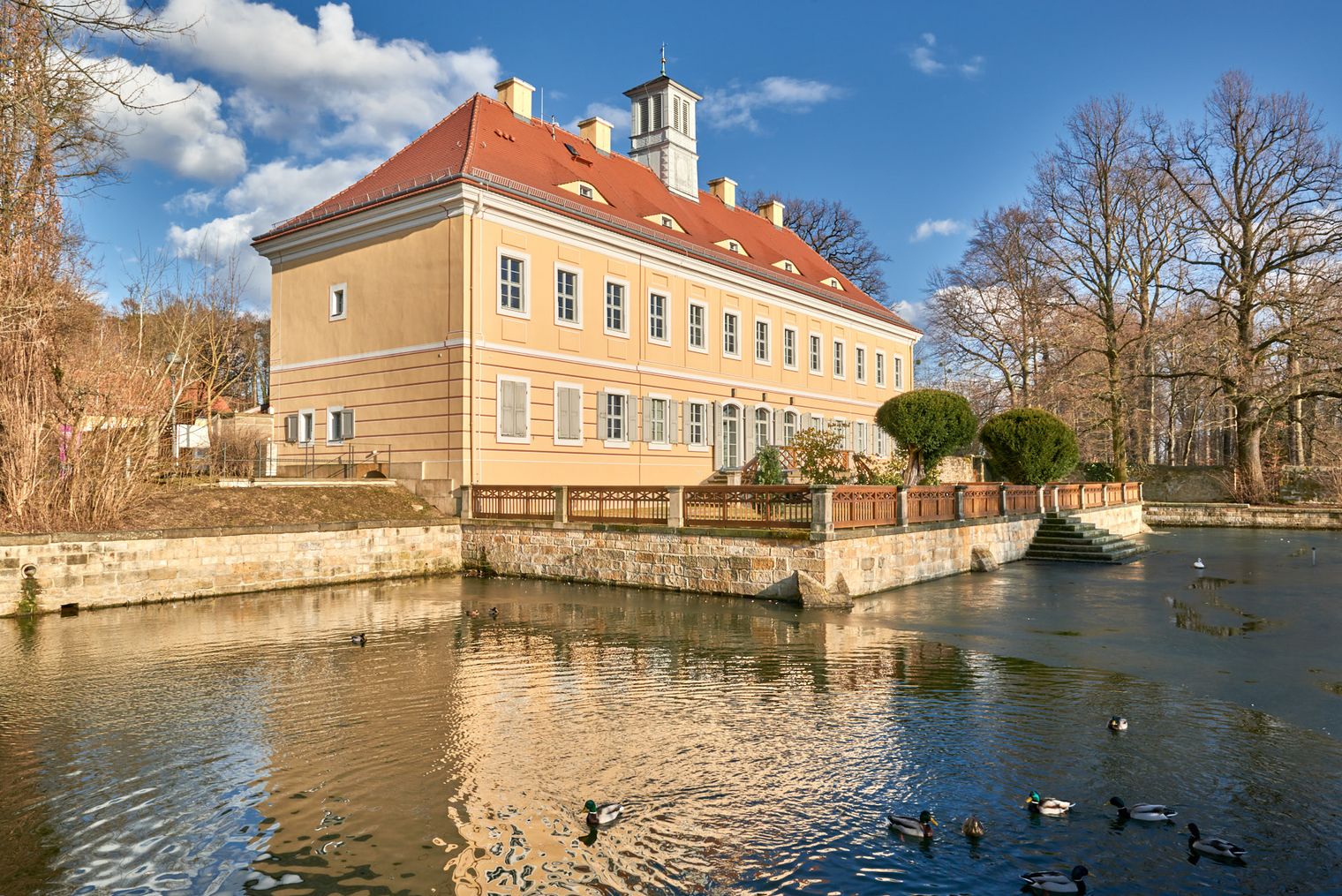
Richard Wagner Sites Graupa

Richard Wagner admired Carl Maria von Weber throughout his life as one of his great role models. Weber's opera "Der Freischütz" impressed Wagner particularly deeply – he saw in it the beginning of an independent German opera tradition. Wagner took up Weber's romantic tonal language, the connection of nature, folk tales, and music, and developed his own musical style from it. In Graupa, the residential house and hunting lodge offer impressive insights into the life, work, and sound world of Richard Wagner.

Tip: The Richard Wagner Sites Graupa commemorate with two summer open-air events at the hunting lodge that the master was a great admirer of Weber's art. The traditional Wagner Meadow, a musical family picnic co-created by amateur artists and ensembles, will become the WagnerWeberMeadow for this purpose - Date: June 7, 2026. 

The Richard Wagner Games in 2026 will also be dedicated to the Weber Year.

Hikes and events

in the footsteps of Carl Maria von Weber