© Marko Förster

Art and History on the Malerweg

The Saxon Switzerland and the painters: That is an exciting story! It begins in the mid-18th century with Johann Alexander Thiele, the first notable landscape painter to dedicate himself to the rocky world. The founding of the Dresden Art Academy also falls into this period. The peculiar landscape on the city's doorstep becomes a popular study subject. And it remains so to this day.

Exhibitions, artist studios, and information boards along the Malerweg invite you to embark on a journey through the region's rich art and cultural history up to the present day. And with some luck, you might encounter a contemporary landscape painter at work along the way.

How It All Began.

A landscape becomes a pilgrimage site and study object.

© Sammlung U.u.D. Hasse, Nationalpark Sächsische Schweiz

In fact, the artistic discovery of the Elbe Sandstone Mountains began as early as the first half of the 18th century. Even then, Johann Alexander Thiele contributed to making the beauty of the picturesque, rugged landscape known through his landscape paintings.

Likewise, Bernardo Bellotto, famous as "Canaletto," who, like Thiele, served as a court painter in the service of the Saxon elector. However, the region only truly became fashionable as a study object later in the 18th century.

Initially, the painters of the Dresden Art Academy came, including the Swiss Adrian Zingg and Anton Graff, to whom the name "Saxon Switzerland" for the Saxon part of the Elbe Sandstone Mountains is presumably owed. The landscape simply fit perfectly with the aesthetic ideal of the time: The "Sublime" and the "Beautiful"—according to the then prevalent aesthetic theories—merge here in an exemplary manner into the "Picturesque."

The region becomes a mecca, a cross-genre study object. Caspar David Friedrich, Johann Christian Clausen Dahl, Carl Gustav Carus, Ludwig Richter, Carl Maria von Weber, Richard Wagner, Mary Shelley, William Turner, Hans Christian Andersen, and many more: The list of prominent visitors to the region reads like a who's who of European Romanticism.

A path emerges, is forgotten, and rediscovered

Favorite paths soon emerge, crystallizing into an ideal route through the region. With the construction of the railway in the mid-19th century, it fell into obscurity. About 100 years later, a first attempt is made to revive the historic route. It is named Painter's Street, later known as the "Historic Painter's Path."

The tourism association builds on this, optimizes the route layout, and adds a left bank section. Thus, in 2006, a stage hiking trail is opened that enchants today's visitors with its numerous moving landscapes, just as it once did the artists of Romanticism: the Painter's Path Elbe Sandstone Mountains. It begins in Pirna-Liebethal, leads through the National Park to the Czech border, and on the other side of the Elbe over five table mountains back to Pirna.

Signs with the inscription "Malerweg" or a sweeping "M" (black on a white background) indicate the direction. A red dot next to the "M" signals that one is walking on the historic route. Originally, the length of the Painter's Path was specified as 112 kilometers. Today, it is said to be 116. The cause of the discrepancy is the error sources of various analog and digital recording methods. Ultimately, the length serves only as an orientation. The more useful benchmarks are the average walking times indicated on the signposts.

© Sebastian Thiel

Art on the Move

Information panels along the Malerweg, a free app with exciting details about history, and other offerings bring the art to life.

© Marko Förster
Frau mit Rucksack betrachtet eine Infotafel vor historischen Gebäuden und einer Kirche.
© Sebastian Thiel

Art-Historical Information Boards

Art Historical Panels

Since 2012, art-historical display boards have been visible at 18 locations along the Malerweg in the Elbe Sandstone Mountains.

Where once famous paintings, drawings, and engravings were created, these very works are showcased and explained. Hiking the Malerweg thus also becomes a cultural experience. Each board displays a particularly significant artistic representation of the respective section of the hiking trail.

Accompanying texts in German, Czech, and English provide compact background information.

Kupferstich einer Landschaft mit Felsen, Bäumen und einem kleinen Fluss; Menschen und Tiere sind sichtbar.
© Sammlung U.u.D. Hasse, Nationalpark Sächsische Schweiz

Inspirational Landscapes

Artists have painted at these locations along the Painters' Way.

Blick auf eine belebte Straße mit historischen Gebäuden und Menschen, die sich versammeln.
© A. Meurer

Tip 2 

Historical Canaletto Painting

Tip: Every year at the end of April, performing arts in Pirna meet historical visual arts! "The Market Place in Pirna" is the most famous of the eleven vedute by the royal Saxon court painter Bernardo Bellotto (Canaletto).
This painting is recreated because the backdrop of Pirna's old town remains nearly unchanged. With actors, dogs, and horses, a small time travel journey to the year 1750 is successfully achieved. 

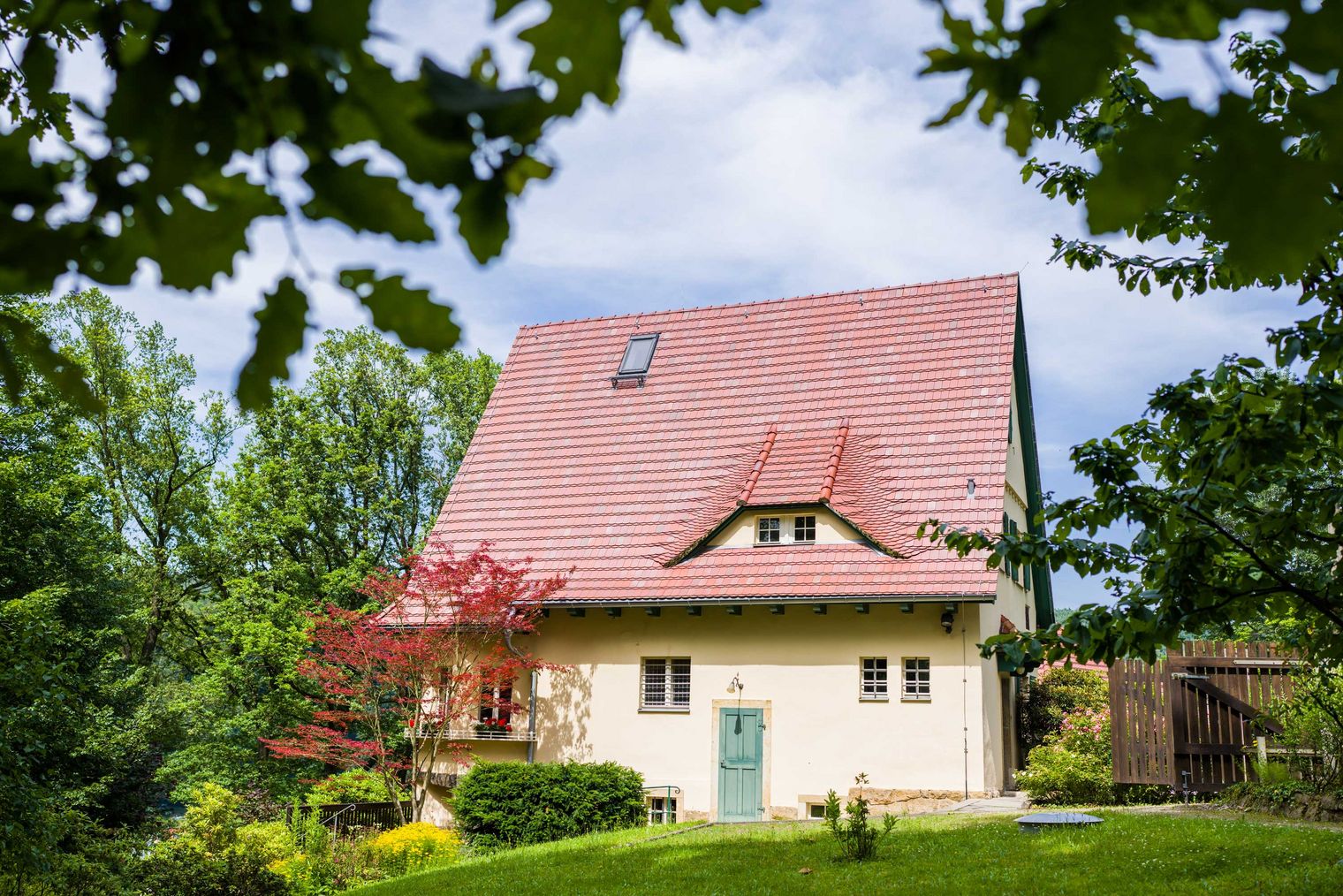
Haus des Malers Robert Sterl mit rotem Satteldach, umgeben von Bäumen und einem gepflegten Garten.
© Sebastian Thiel

Tip 3

Robert Sterl House

The uniqueness of the Robert Sterl House, located on the 8th stage of the Painter's Path, lies in it being one of the few artist residences in Germany preserved in its original state! In the originally preserved home of the significant Impressionist, alongside a rotating selection of paintings from Sterl's extensive estate in special exhibitions, works by contemporary artists are also on display.
 

Art back then

Since the mid-18th century, Saxon Switzerland has been a popular destination for painters. Renowned artists have found inspiration here. 

© Sammlung U.u.D. Hasse, Nationalpark Sächsische Schweiz
Landschaft mit hohen Bäumen, einer Gruppe von Menschen und sanften Hügeln im Hintergrund.
© Sammlung U.u.D. Hasse, Nationalpark Sächsische Schweiz

From Adrian Zingg to Caspar David Friedrich and Robert Sterl

These artists traveled through the Elbe Sandstone Mountains.

The images presented here are available as collectible postcards for free from the hiker-friendly hosts on the Painter's Way and at the information centers along each stage.

Landschaft mit einem Berg im Hintergrund, einem See und Bäumen im Vordergrund, sanftes Licht und Wolken.
© Estel/Klut, Staatliche Kunstsammlung Dresden, Gemäldegalerie Alte Meister

Johann Alexander Thiele

Thiele (*March 26, 1685, in Erfurt, † May 22, 1752, in Dresden) was highly renowned in his time and is now unjustly largely forgotten. He served as court painter to Augustus III of Saxony in Dresden and created numerous views of Albertine Saxony, which include depictions of the Elbe Valley between Meissen, Dresden, and Pirna up to the Königstein Fortress. As a teacher, he established a rich tradition of Saxon landscape painting. The depicted painting of the Königstein Fortress, despite the typical Baroque abundance of topographical and figurative details, already shows some features of romantic landscape depiction.

Historische Stadtansicht von Pirna mit Gebäuden, Türmen und einer belebten Straße.
© Klut, Staatliche Kunstsammlung Dresden, Gemäldegalerie Alte Meister

Bernardo Bellotto (Canaletto)

Canaletto (* May 20, 1722, in Venice, † October 17, 1780, in Warsaw) was the pupil of his famous uncle Antonio Canal, whose name he adopted. He relocated from Italy to Munich in 1745, moved to Dresden in 1746/47, and went to Vienna in 1759/60. His vedute combine a picturesque atmosphere with precise detailing of high documentary value. In the Saxon Switzerland, he created a series of views of Pirna and the Königstein Fortress. The depicted view of the Pirna marketplace testifies to how accurately Bellotto captured the details. For this, he used a "camera obscura," a replica of which can be visited today at the tourist information center.

Landschaft mit Fluss, Bergen im Hintergrund und Personen, die am Ufer arbeiten. Sepiatöne dominieren das Bild.
© Sammlung U.u.D. Hasse, Nationalpark Sächsische Schweiz

Adrian Zingg

Adrian Zingg (* April 15, 1734, in St. Gallen, † May 26, 1816, in Leipzig) received his artistic training first from his father, then from the Berlin veduta painter Alberli, and later in Paris. In 1766, he came to Dresden as an electoral court engraver and teacher at the newly founded Art Academy. During walking tours through the Elbe Sandstone Mountains, he created numerous drawings, from which sepia sheets, copper engravings, and etchings were produced. Zingg is considered a pioneer of modern Dresden landscape painting. The sepia copper engraving depicted here shows how Zingg strives for topographical accuracy, while at the same time, exaggeratedly enhancing the characteristics of objects and landscape elements in a mannerist style.

Felslandschaft mit hohen Felsen und Nebel..
© Belvedere, Wien

Caspar David Friedrich

Caspar David Friedrich (* September 5, 1774, in Greifswald; † May 7, 1840, in Dresden) is considered the most significant painter of German Romanticism. The landscape of the Saxon Switzerland inspired him during his hikes to create symbol-laden landscape depictions. His most famous work, "Wanderer above the Sea of Fog," is regarded as the epitome of Romanticism. It was created in 1818 and can be admired today in the Hamburger Kunsthalle. Other works can be found in the Gallery of "New Masters" in Dresden.

More information about C.D. Fr
Blick aus einer Höhle auf eine Landschaft mit Bäumen und Bergen im Hintergrund, Menschen stehen im Vordergrund.
© Sammlung U.u.D. Hasse, Nationalpark Sächsische Schweiz

Johann Carl August Richter

Johann Carl August Richter (* March 29, 1785 in Dresden, † 1853 in Dresden) was a landscape and architectural draftsman, painter, etcher, engraver and lithographer. He found his subjects mainly in Saxony; most of his detailed vedutas show views of Dresden and its surroundings. He himself etched/engraved only the contour lines and provided instructions on how specialized assistants (most likely students at the Dresden Art Academy or Meissen porcelain painters) should execute a delicate watercolor to be applied over it. Due to the differences in this execution, each sheet ultimately became a unique piece. The colored views were primarily intended as souvenirs for foreigners.

Landschaft mit sanften Hügeln, grünen Wiesen und einem hellen Himmel mit Wolken.
© Staatliche Kunstsammlung Dresden, Hoffmann

Ernst Ferdinand Oehme

Ernst Ferdinand Oehme (* 1797 in Dresden, † 1855 in Dresden) is regarded as a significant painter of Late Romanticism and was a student of two outstanding artists of Romanticism, the Norwegian Johann Christian Clausen Dahl and Caspar David Friedrich. He shared a close friendship with Ludwig Richter. He created numerous poetic landscapes with charming light effects.

Historische Mühle in einer ländlichen Umgebung, umgeben von Bäumen und Hügeln.
©  Sammlung U.u.D. Hasse, Nationalpark Sächsische Schweiz

Adrian Ludwig Richter

Adrian Ludwig Richter (* September 28, 1803 in Dresden, † June 19, 1884 in Loschwitz) was one of Germany's most significant late Romantic artists. Even during his training with his father, his talent as a landscape illustrator became evident. After traveling through France and Italy, he taught for several years at the drawing school of the Royal Porcelain Manufactory Meissen and began a teaching position at the Dresden Academy of Fine Arts in 1836. He became widely popular mainly through his numerous illustration graphics, in which he affectionately depicts the life of ordinary people. The copper engraving shown here demonstrates Richter's talent for idyllic and detailed portrayals.

Sechs Arbeiter ziehen gemeinsam an einem Seil, um einen schweren Block zu bewegen.
© Jürgen Karpinski

Robert Sterl

Robert Sterl (* June 23, 1867, in Großdobritz, † January 10, 1932, in Naundorf) is considered a significant German Impressionist. From 1906, he served as a professor at the Dresden Academy of Fine Arts, gaining fame for his landscapes, portraits, quarry worker, and conductor paintings. From 1919 until his death in 1932, he lived in a residential and studio house in Naundorf. Today, it is a fascinating museum where, among other things, the artist's estate is managed, curated, and partially displayed. In the painting "Quarry Worker," Sterl impressively highlights the effects of light and color in a dynamic composition.

Contemporary artists on the Malerweg

Even today, the Malerweg continues to inspire artists from the region. 

© Marko Förster
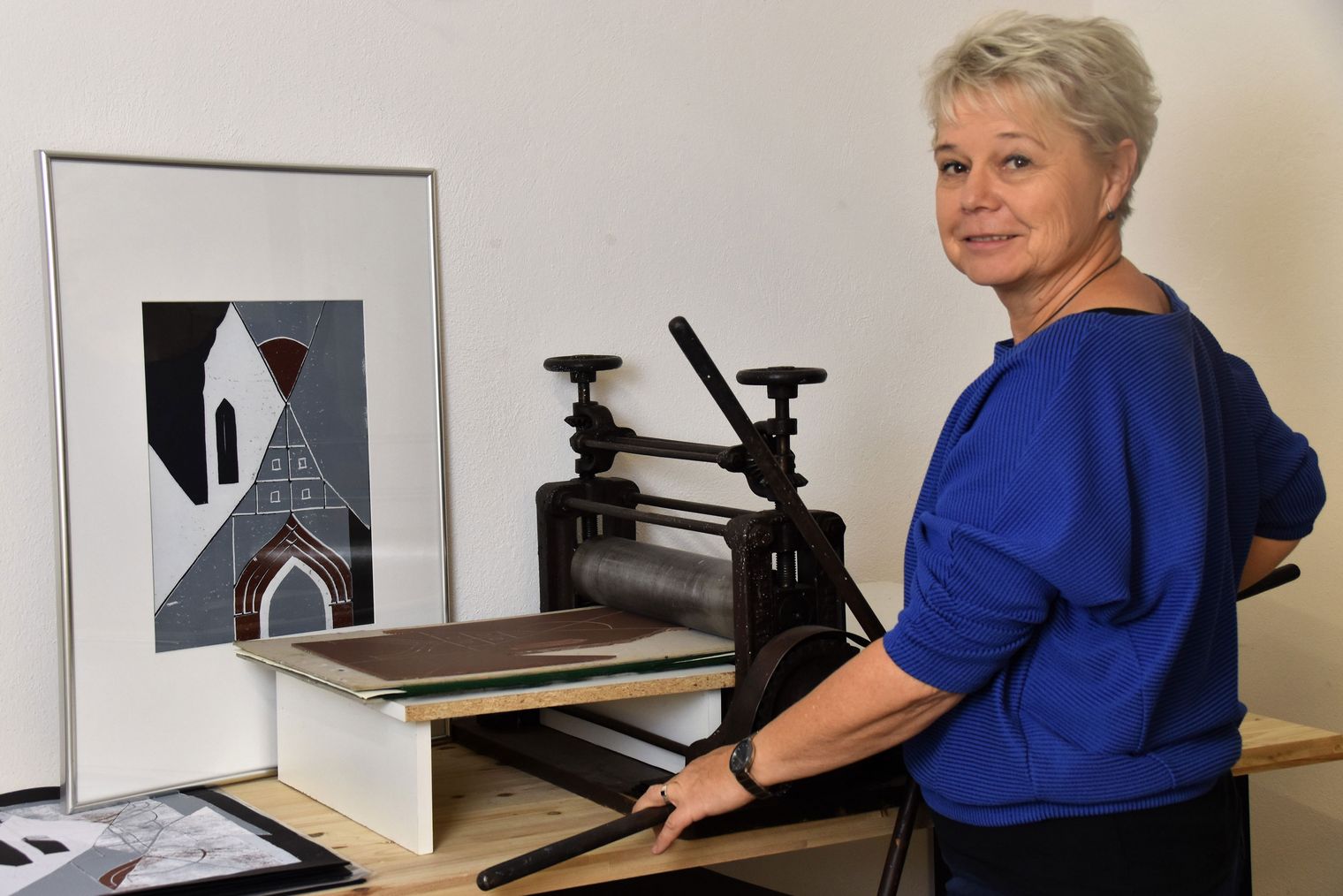
Künstlerin mit kurzem, grauem Haar steht neben einer Druckmaschine, umgeben von Druckmaterialien und einem gerahmten Kunstwerk.
© Claudia Pinkau

Gallery Workshop Ansichtssache Pirna

Gallery Workshop Pirna Painting, Graphics, and More: Heike Küchler and Claudia Pinkau have created a space for art and creativity with their gallery workshop "Ansichtssache" in Pirna.

At Kirchplatz 5, next to the Marienkirche, they display works from the Malerweg and offer courses in landscape painting. Every Friday from 2 PM to 6 PM, and from April to December also on Saturdays from 10 AM to 2 PM, they invite interested individuals to their open workshop.

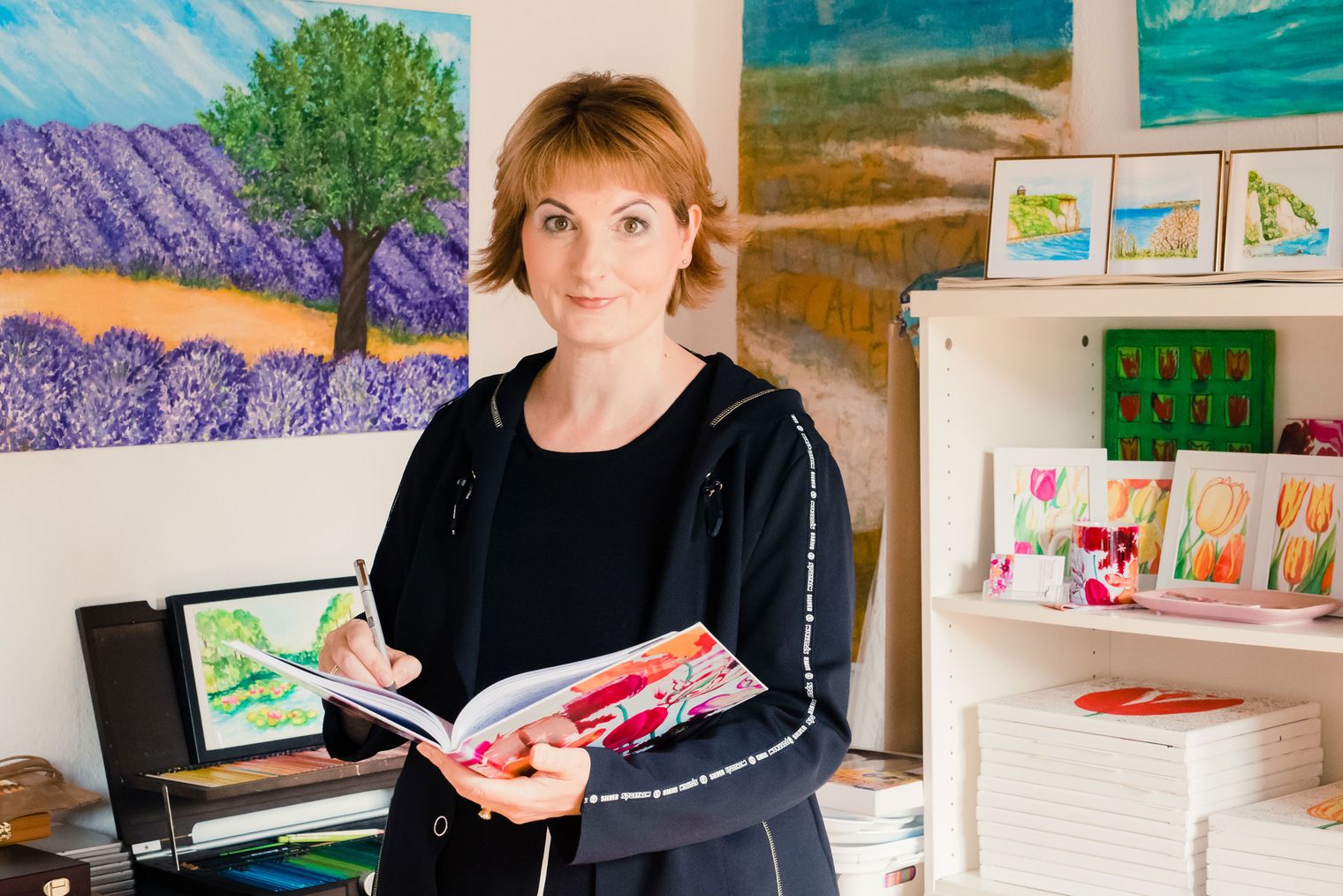
Künstlerin mit kurzem Haar hält ein Buch in einem Raum mit bunten Bildern und Pflanzen.
© Agentur Projekt40/Jeanette Koch

Studio on the Malerweg - molière artdesign

Visit Andrea Molière at her studio in Lohmen, directly on the Malerweg, and let yourself be enchanted by her "individual art with heart." Enjoy the magnificent studio view of Lohmen Castle and the romantic surroundings of the Wesenitztal.

Do you want to get creative yourself? In individually tailored individual or group courses, Andrea Molière invites you to her studio or will creatively engage with you along the Malerweg.

Historische Schwarz-Weiß-Fotografie der Basteibrücke zwischen Felsen und Bergen.
© Hermann Krone Sammlung IAPP TU-Dresden

Photography on the Painters' Trail

In fact, the Painter's Path in the Elbe Sandstone Mountains could just as well be called the "Photographer's Path in the Elbe Sandstone Mountains." The incredible density of subjects makes the route a paradise for photographers. Peaks above a sea of fog, gnarled pines on rock faces, streams in wild and romantic gorges: what fascinates painters also entices photographers.

Mighty table mountains at sunset, grass-green moss-covered stones, solitary rock needles before breathtaking panoramas: the picturesque weathered rock world of the Elbe Sandstone Mountains is a cornucopia of spectacular subjects.

Photographing the Elbe Sandstone has tradition: the first photograph of the Elbe Sandstone is almost as old as photography itself! It was created in 1853 by the Dresden photography pioneer Hermann Krone on the Bastei, one of the most popular excursion destinations in Saxon Switzerland. A commemorative plaque at this very spot serves as a reminder.

So much has happened in the more than 170 years since he first painstakingly captured images of the Elbe Sandstone Mountains. Heavy wooden cameras are no longer dragged on handcarts through the forest. What is needed for photography fits into a backpack or — for lower demands — even into a back pocket.

What remains is the fascination of the Elbe Sandstone Mountains as a motif — as well as the photographer's task of using a trained eye and creativity to find precisely the one image from the infinite variety of possibilities. No camera, no matter how expensive, no software can relieve this task. And that is precisely what is fascinating about landscape photography.

Photographers draw abundantly from it. Hundreds of thousands of images can be found on Instagram and Facebook. And year after year, new photo books and calendars of the Elbe Sandstone Mountains come to market.

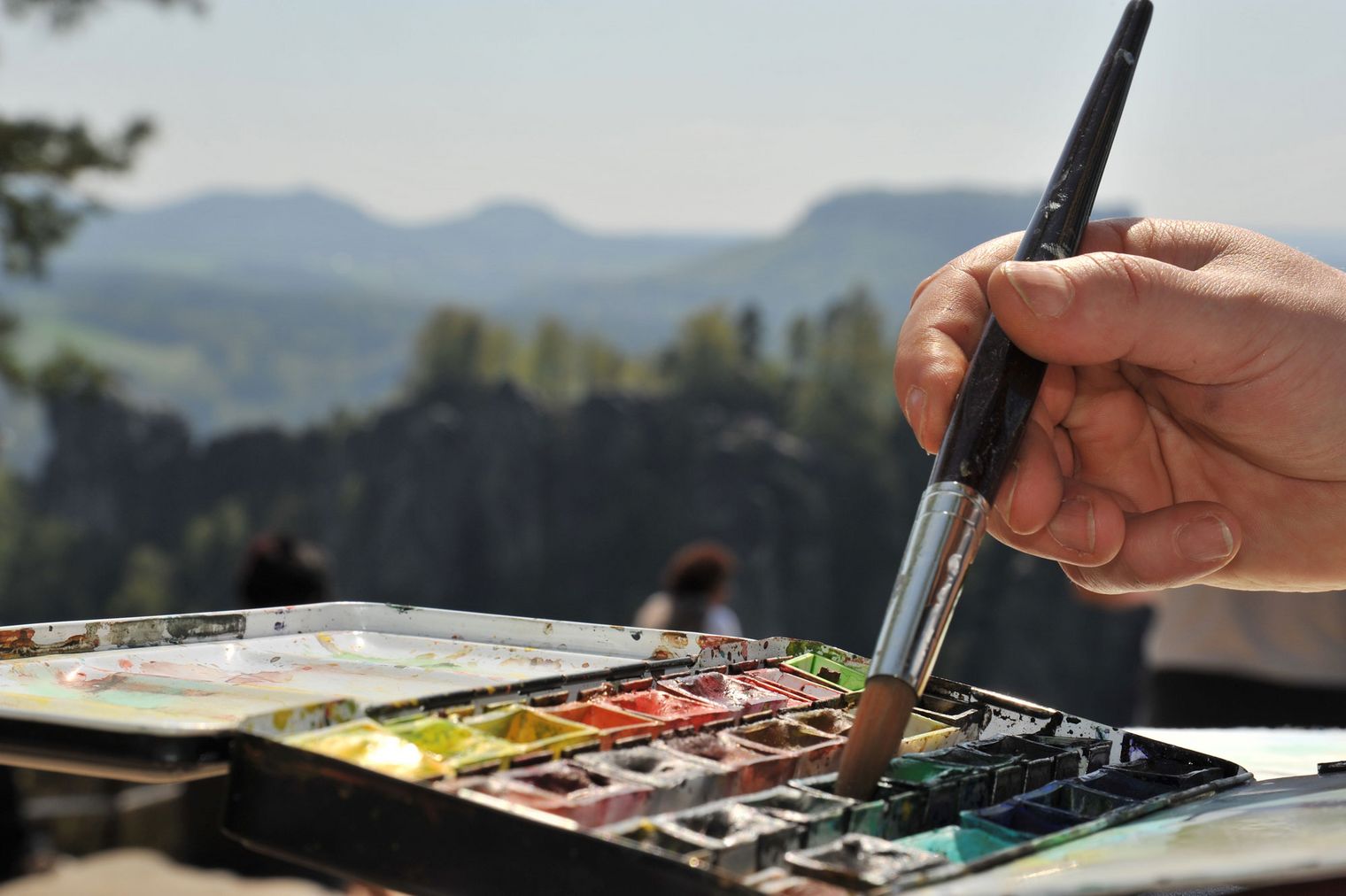
Eine Hand hält einen Pinsel über eine Palette mit Wasserfarben, im Hintergrund sind Berge und Bäume.