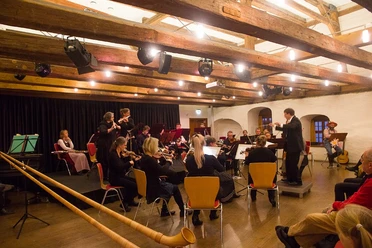
The first special exhibition of the EU project "Childhood in the Nobility and Bourgeoisie" at Weesenstein Castle with the Regional Museum Děčín is dedicated to the question of who had access to what food at what times. From "daily bread" to opulent display panels, the discussions range from basic human issues such as breastfeeding babies, indulgence and eating to survive, meat consumption and vegetarianism, ingredients and their origin - and of course the way they were prepared. Before exotic spices found their way into Europe's kitchens, the paste made from the seeds of an inconspicuous plant called mustard was already enjoying an astonishing success story.
In his lecture, Steffen Retzlaff, cultural educator in the EU project at Weesenstein Castle, traces how food in Germany and Bohemia was once and still is today.
The history breakfasts provide interested visitors with culinary and intellectual delights. We cordially invite all those "hungry for education"!
Price info
- 26€