Landscape & wildlife
The Painters’ Way in the Elbe Sandstone Mountains passes through an ancient landscape shaped by erosion. What was once seabed during the Cretaceous period is now a diverse rocky landscape with mountains rising to 723 metres.
The Painters’ Way in the Elbe Sandstone Mountains passes through an ancient landscape shaped by erosion. What was once seabed during the Cretaceous period is now a diverse rocky landscape with mountains rising to 723 metres.
So beautiful, so wild, so mysterious
Seasoned men sinking to their knees at viewpoints, overcome with emotion; eloquent women writers rendered speechless by panoramic vistas: 200 years ago, such scenes were to be expected in the Elbe Sandstone Mountains. After all, this was the Romantic era, an age of profound emotion, when the spectacular rocky landscape south-east of Dresden was first discovered as a hiking destination.
Geologists have since unravelled the mystery of how this natural wonder was formed. A 600-metre-thick sandstone slab had developed on the seabed over several million years before being uplifted, fractured and weathered. What remained was a region as mystical as the setting of a fantasy film: with bizarre rock formations, mysterious gorges, wildly romantic valleys – and table mountains! Nowhere else in the world are these curious landforms found in such abundance and such close proximity.
All of this makes hiking in the Elbe Sandstone Mountains so exhilarating. One moment, the trail passes through dense forest; before long, it leads across open countryside, then climbs high onto bare rocky summits, only to wind deep down into an enchanted valley where a crystal-clear brook murmurs.
This is where magnificent encounters with nature await. Saxon Switzerland National Park and Bohemian Switzerland National Park protect a valuable refuge for rare animal and plant species. Together with the surrounding protected landscape area, they form a hiking paradise spanning more than 700 square kilometres!


What would the world be without national parks? Within them, humanity preserves its most precious natural landscapes for future generations. “Let nature be nature” is the guiding principle of the global national park movement. This means that people confine themselves to the role of observers who marvel and learn. National parks are not only fascinating refuges for rare animal and plant species. They are also idyllic places of recreation for visitors.
The Saxon Switzerland National Park is no exception. It is Germany’s only non-Alpine rocky national park – and, at approximately 94 square kilometres, one of the smallest in the Federal Republic. The protected area comprises two sections on the right bank of the Elbe. The smaller section surrounds the spa town of Rathen. The main section extends eastwards from Bad Schandau to the Czech border, where it adjoins the Bohemian Switzerland National Park.
National parks require considerate behaviour. Anyone passing the Saxon Switzerland National Park sign should be aware that they are entering a particularly sensitive nature conservation area.
The following rules apply here:

"Core zone" is written on some signs in the Saxon Switzerland National Park. This indicates to visitors particularly protected natural areas. A quarter of the total area of the national park is designated as a core zone.
Hiking is allowed in these green paradises on all marked trails. Additionally, overnight stays in the open air are forbidden here.
The core zone is entirely within the much larger "quiet area." Here, the forest can already develop largely independently. Thus, a piece of genuine Central European wilderness exists or is emerging.
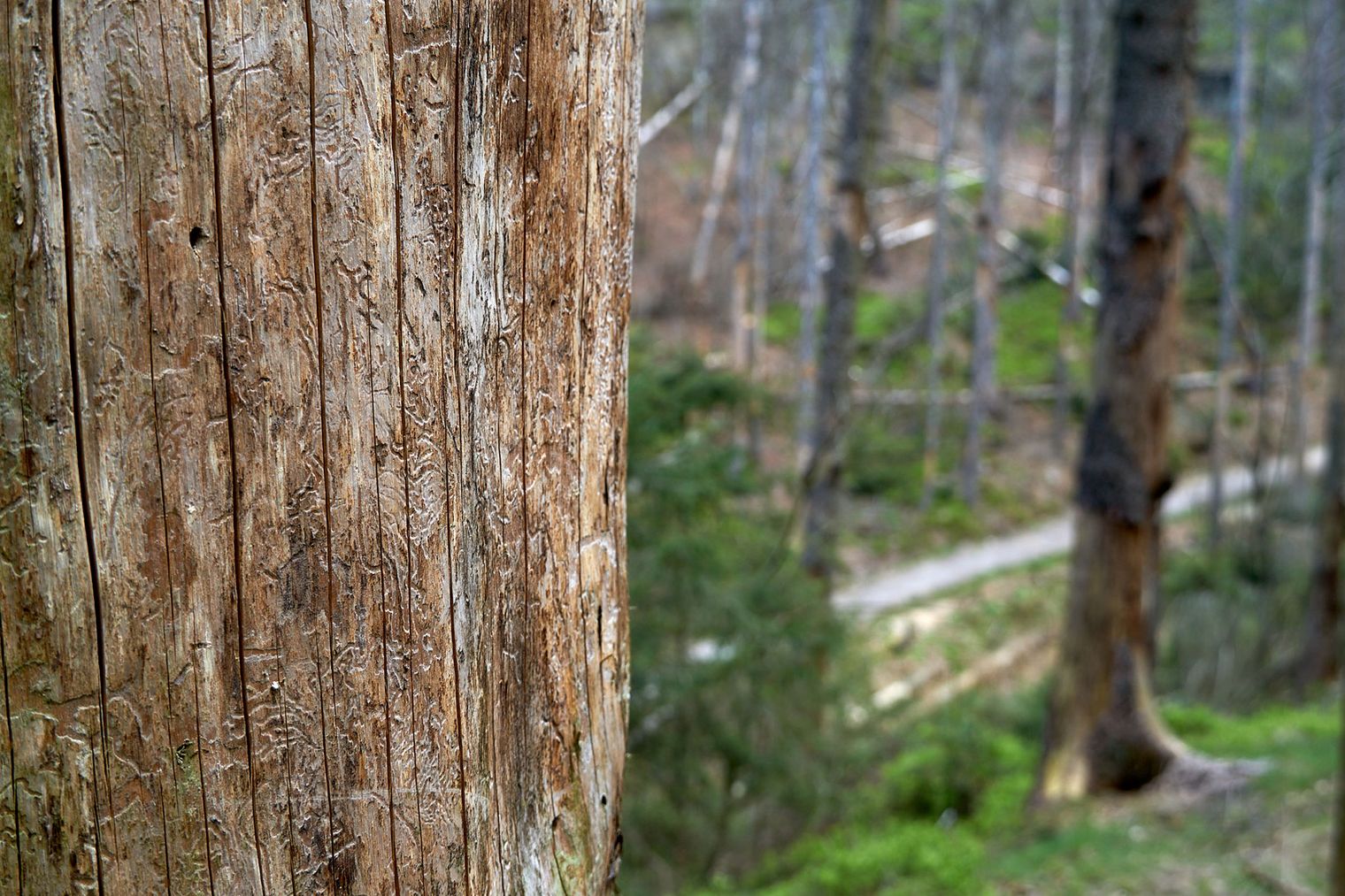
Bare branches, brown needles, fallen trees. In some areas of the national park region, the bark beetle is particularly active at present. Here, natural forest development is taking place: spruce plantations are dying off; healthy mixed forests are emerging.
Until this process is complete, special precautionary measures apply due to the risk of falling trees: Avoid the forest during strong winds, heavy rain, or snow loads. Do not stand under broken branches or tree tops. You enter the forest at your own risk.
Note: certain trail sections may become impassable at short notice due to fallen trees (bark beetle damage). Please check the homepage of the National Park and Forestry Administration or inquire at your local accommodation about the current status before your trip.
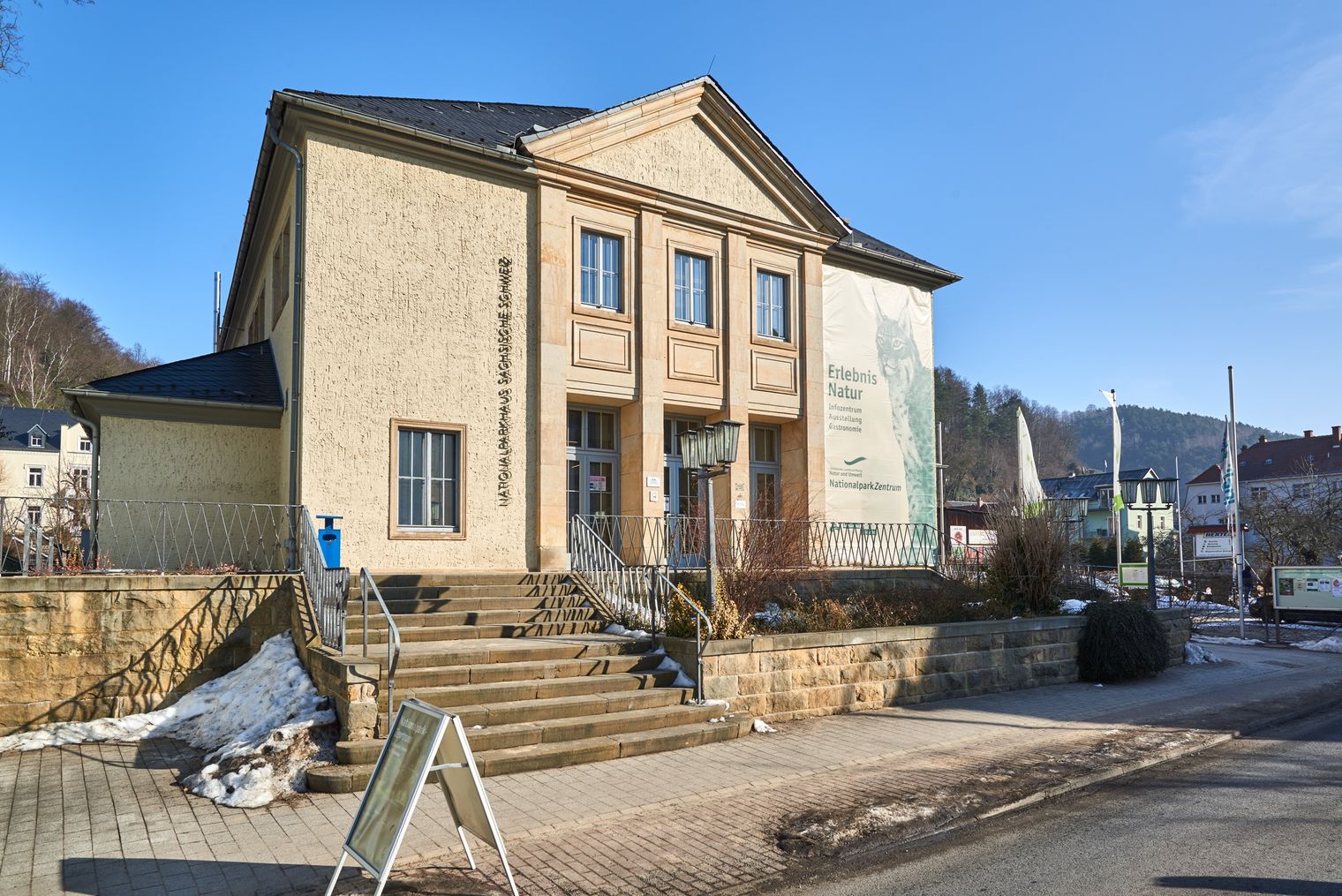
The National Park Center Saxon Switzerland in Bad Schandau is the visitor center of the protected area.
How did the enigmatic rocky landscape come into being? Which rare animals inhabit this area? How does the forest ecosystem function? The interactive exhibition provides informative and family-friendly insights into these questions with numerous models.
The highlight is a multimedia show in the cinema hall featuring fantastic images from the national park region.
In the Elbe Sandstone Mountains, rare, well-known, but also foreign species are at home. They enjoy the tranquility and seclusion, high rock walls, and countless hiding places. Psst... hiking can thus lead to special encounters.


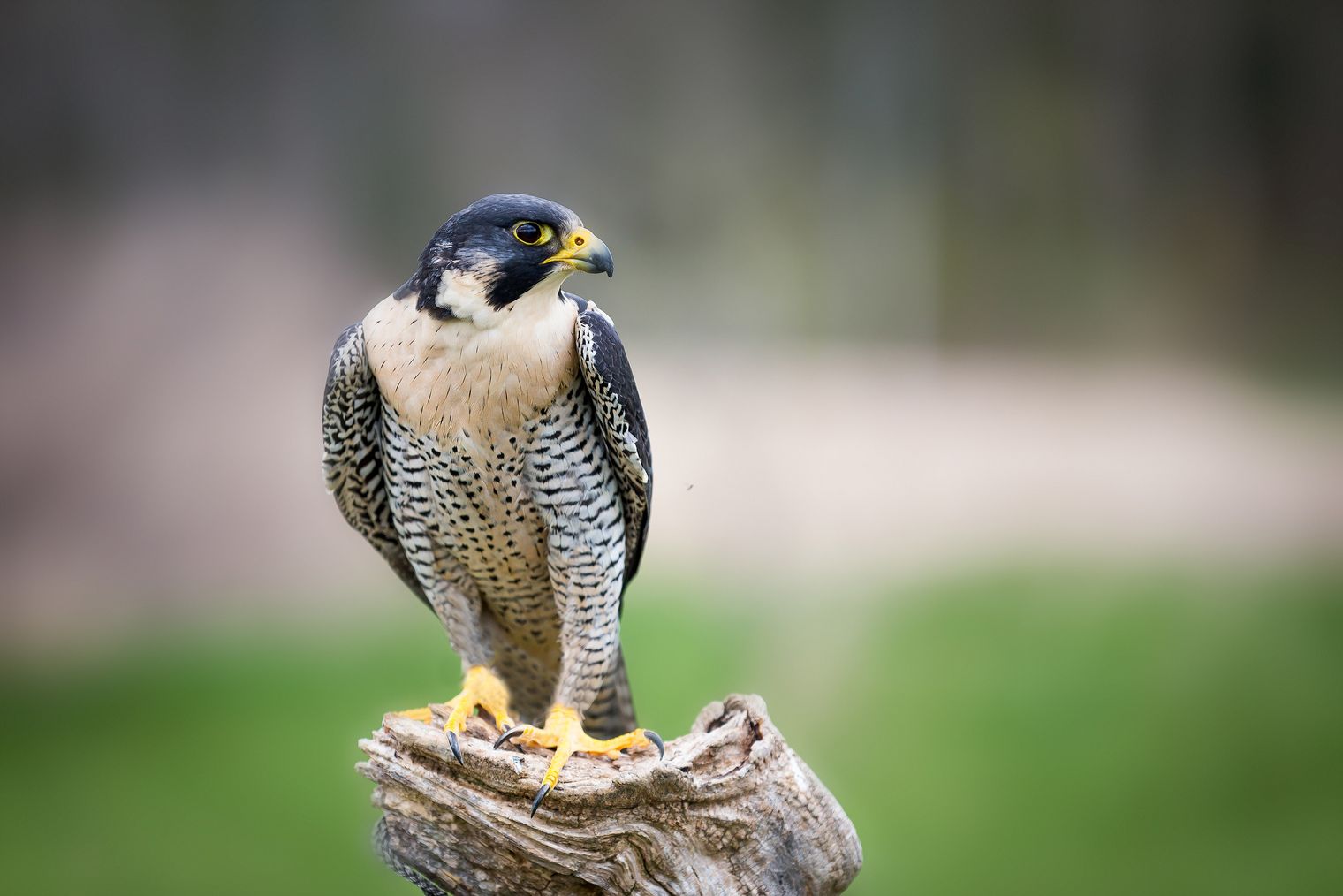
With a bit of luck, hikers in the Saxon Switzerland National Park region can hear it: the call of the fastest animal on earth, the "cheetah of the skies." We are talking about the peregrine falcon. The fact that its long-drawn "gääähg-gääähg-gääähg" is once again part of the natural soundscape of Saxon Switzerland is the result of a Herculean effort—and ongoing care.
Fifty years ago, the species was considered extinct in Saxon Switzerland. It was only a complex reintroduction project by the national park administration in the 1990s that brought it back. Today, the Elbe Sandstone Mountains is one of the most densely populated peregrine falcon habitats in Europe!
Other rare animals that you might spot with luck and a bit of patience include water ouzels, fire salamanders, black storks, and colorful kingfishers.
Tip: Certified national park guides offer discovery tours almost daily.