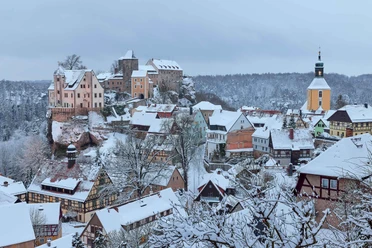
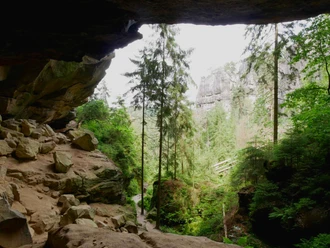
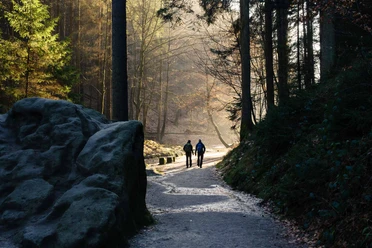
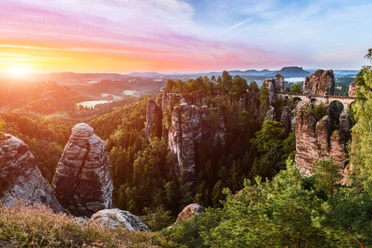
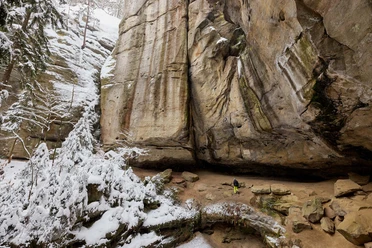
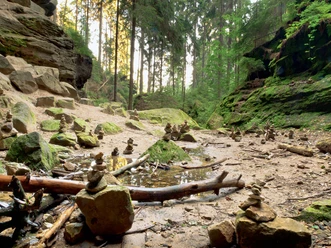
The bear garden is located below Hohnstein Castle and was built in 1609. It served as a bear enclosure until 1756.
The bear garden, which belonged to Hohnstein Castle, was created on the orders of Elector Christian II. From 1609, it served the Dresden court as an animal enclosure for keeping bears that were used for hunting. Occasionally, the bears escaped from the enclosure and fled into the surrounding woods. The bear garden has not been used since 1756.
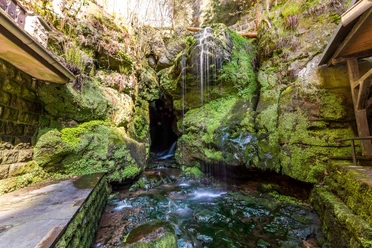
The ruins of the enclosure are characterized by their impressive, metre-high walls, which frame a large archway made of hewn sandstone and can still be seen today.
The bear garden, which belonged to Hohnstein Castle, was created on the orders of Elector Christian II. From 1609, it served the Dresden court as an animal enclosure for keeping bears that were used for hunting. Occasionally, the bears escaped from the enclosure and fled into the surrounding woods. The bear garden has not been used since 1756.
The ruins of the enclosure are characterized by their impressive, metre-high walls, which frame a large archway made of hewn sandstone and can still be seen today.
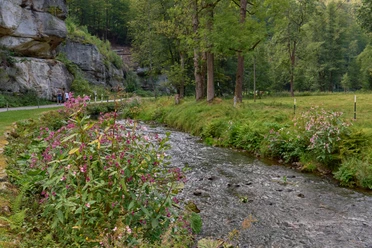
A picturesque ruin, reminiscent of a triumphal arch, through which a small stream gurgles like a cascade: The scenery at the Schinderloch in the wild and romantic Schindergraben near Hohnstein looks as if it was created especially for Caspar David Friedrich. Yet everything is authentic. It is the remains of a facility where bears were kept until the middle of the 18th century. Caspar David Friedrich passed by here during his forays around Hohnstein in July 1800. And of course he captured the motif in his sketchbook, even though the little stream had unfortunately dried up in the rainy summer of 1800.
Openings
- Mountains/viewpoints/viewing towers
The Bear Garden is always open.
Please note: The Waitzdorfer Aussicht is located in the national park. This means that only marked paths may be used in the core zone! Fines may be imposed for offences. Price info
- Mountains/Viewpoints/View towers
You do not have to pay an entrance fee to visit the Bear Garden. Eligibility
Suitable for any weather
for Groups
Pet allowed
Directions & Parking facilities
- Only accessible on foot.
Bus routes: 236, 237, 254
Bus stop: Polenztal Serpentine, Hohnstein
Walking distance approx. 30 min